Ultimate Guide to Skid Steer Augers
Efficient foundation drilling is the first step to a successful construction project. It is applicable in the case of fence post installation, to planting big trees, and even when setting up the foundation of a new house.
Out of the many tools used for such outdoor work, a skid steer auger is the most preferred one as it can give the same result as hard manual work with its high torque and precision combination.
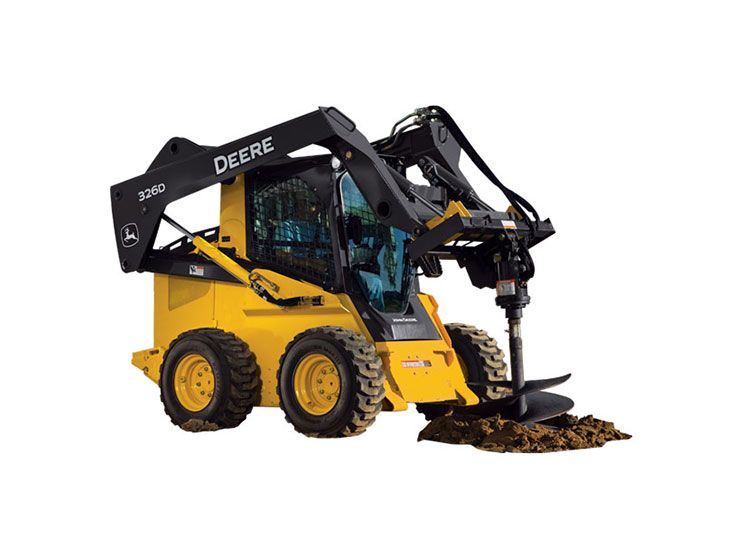
A powerful earth auger coupled with a skid steer loader can make an ordinary earthmover a very competent drilling machine that will go through different types of soils very easily.
A contractor who wants to have a very productive construction site with a minimum of non-working periods has to be very familiar with the use and compatibility of a machine as well as the best practices of the operation of attachments like these.
- High-torque planetary drives are an excellent source of consistent drilling power when the bit is forced through hard clay and gravel soil.
- Heavy-duty flighting built on the auger bits effectively facilitates the evacuation of dirt out of the hole.
- Universal quick-attach systems provide a straightforward change from the auger to other tools.
The Engineering Behind High-Performance Earth Augers
The main components that determine the overall performance of a skid steer auger are the hydraulic motor and the gear reduction mechanism that takes the hydraulic flow from the loader and translates it into a rotational force.

When you are doing foundation drilling, a planetary drive system will have more advantages than a direct drive because it is capable of a higher torque multiplication allowing the bit to break through the compacted soil without the motor going to stall.
The TYPHON STOMP series of attachments, are designed to endure these high loads and thus the result is that each turn of the bit goes deeper and cleaner. The very first step of your drilling operation optimization is basically choosing the drive type that suits exactly the kind of job you want to do, be it for quick post-fence installations or for high-torque foundation pier work.
- Planetary gear systems bring out the best leverage to be used for larger diameter bits and drilling deeper holes.
- Hydraulic flow requirements need to be identical for both the skid steer and the auger motor to perform at their best.
- Most of the dust and dirt resistant components are also highly efficient at preventing the ingress of moisture, which helps the longevity of the electric motor.
Choosing the Right Auger Bit for Your Soil Conditions
Bits are not one-size-fits-all when it comes to the skid steer auger. A standard bit can perform well if the site comprises mostly of loose soil and sand. However, if you are on a site with shale, frozen ground, or heavy gravel where the drilling bit has to be really rugged, then it is basically impossible to work without rock bits or industrial-grade bits.
The bits come with reinforced teeth and pilots which are replaceable when worn out, so your investment will last for a long time. To make a wise purchase decision, one must consider the bit diameter that is just right for the foundation requirements and also the capability of the skid steer to extend and have access to the soil weight lifted after the bit is fully immersed in the ground.
- Tungsten carbide tipped teeth are very hard and so, highly effective for drilling through asphalt or rocky terrains.
- Variable flighting pitches aid in the more quick clearing of debris in wet or sticky clay situations.
- Extension shafts are an option that can be used along with standard bits for getting down to the depths demanded by deep foundation piers.
Maximizing Productivity with the TYPHON STOMP Series
If speed is something that you cannot do without then you should get a TYPHON STOMP Mini Skid Steer and pair it along with a specifically made earth auger attachment. These little machines are mainly made to move around tight jobsites where big machinery can hardly find any parking space thereby giving them their ideal place in residential foundation repairs or backyard landscaping projects.
The coupling that happens between a very responsive hydraulic system and a tough skid steer auger enables you as the operator to get the holes accomplished with less physical stress while still being able to do more.
Moreover, these units have low maintenance requirements which mean that your equipment will remain working time rather than being sent to the workshop.
- Compact build means that the machine can be maneuvered with great accuracy even in tight spots such as narrow alleys or gardens.
- Easy-to-understand controls make it possible for even novice users to deliver professional-grade drilling performances.
- Typoh Series machines have a very strong build quality that allows them to bear up to 10,000 hours of heavy use.
Comparing Auger Drive Types for Foundation Work
| Drive Feature | Direct Drive | Planetary Drive |
| Primary Benefit | Higher bit speed for soft soils | Maximum torque for heavy-duty drilling |
| Maintenance | Fewer moving parts | Requires periodic gear oil checks |
| Best Application | Fencing and small landscaping | Foundations, piers, and rocky ground |
| Cost Efficiency | Lower initial investment | Higher ROI for professional contractors |
Safety and Operational Excellence in Drilling
Working with a skid steer auger isn’t doing a straightforward operation by just pulling and releasing a lever. The operator’s focus must be on safety, and their hands must be steady. Locating underground facilities before digging is an essential step, thus getting in touch with local utility locators is highly recommended.
Operating the machine vertically is of utmost importance if the foundation is to be structurally sound. ‘Screwing’ the bit too fast into the ground is a typical symptom that the operator is pressing the bit too hard. The operator should regulate the pressure applied to the bit to release the captured soil that is wedged in its spirals.
This way, the skid steer auger torque can be effectively transmitted to the soil without locking the machine, neither does the skid steer hydraulic arms gets stressed.’
- Conduct visual checks of hydraulic hoses before connecting the auger drive for any leakage or abrasion.
- Make sure the “swing” of the auger is limited so as not to cause harm to the machine chassis during hauling.
- Maintain a safe distance from the worksite to avoid injuries from flying debris or rotating parts.
Maintenance Tips for Long-Lasting Auger Attachments
With proper maintenance, a skid steer auger can remain a dependable workhorse even after several years of use. This means that the planetary gear oil has to be changed every 50 hours of operation, and the cutting teeth have to be checked regularly for excessive wear.
Dulling of the cutting edges can not only reduce the rate of the drilling process but also increase the load on the hydraulic motor. The best suggestion for the attachment is to be washed after every use, more so if it has been used on soils that are corrosive or when the weather has been wet, so as to combat rust and preserve the stability of the quick-attach mounting plate.
- Lubricate continuously the pivots in the linkage as well as the output shaft to enhance easy turning.
- As soon as a pilot bit starts to show signs of rounding, replace it so that accuracy in drilling is not compromised.
- Keep your auger drive and bits in a place free of moisture to protect the hydraulic seals.
Conclusion: Skid Steer Augers and Foundation Drilling
In conclusion, integrating Skid Steer Augers and Foundation Drilling can tremendously help in making your work more efficient. With their capacity to smoothly drill through different terrains quickly and steadily, they become a valuable tool for any contractor.
Besides, if you are well-informed about the correct choice of augers and their care, you will be able to get excellent results and, at the same time, reduce downtime.
When you are preparing your upcoming foundational project, think about the benefits that high-quality skid steer augers can bring to you. Get the right tools and see how your drilling efficiency changes!
FAQ’s for Skid Steer Augers and Foundation Drilling
What size skid steer do I need for a 36-inch foundation auger?
To be able to successfully operate a 36-inch diameter bit, it is recommended that the skid steer be a high-flow hydraulic system kind with a rated operating capacity (ROC) which can easily carry the weight of the bit plus the weight of the soil that it extracts. Most mid-mount and large frame loaders can be used for this purpose, but you still need to verify your machine’s hydraulic PSI and GPM ratings versus the motor requirements of the auger.
Can I use a skid steer auger to drill through solid rock?
Of course, it is possible to use a skid steer auger to break into solid rock but for this, a rock bit that has carbide bullets has to be used. A regular earth bit can only last for a very short time before it becomes dull. Besides that, in order to be able to properly apply a high-torque planetary drive for rock drilling, the slow and powerful rotation that is needed for grinding the stone through the drive is thus provided.
How deep can a skid steer auger drill for a foundation?
In general, a standard auger bit has a length of 4 feet. Nevertheless, by making use of some bolt-on extensions, the hole that you will be able to reach will be 10 feet or even more subject to the reach of your skid steer and the stability of the soil. Take note that the deeper the holes, the more hydraulic power goes into the lifting of the soil.
Why is my auger spinning but not digging into the ground?
The main reasons for this problem are, the toothed edges are worn out or the pilot bit being dull. When the cutting edges can no longer penetrate the surface, the auger, therefore, spins over the top of the soil. One other possibility is that you may be hitting a layer of hard pan which means that either you need more down pressure or a differently shaped bit.
Is a direct drive or planetary drive better for foundation piers?
Planetary drive offers the high torque necessary to turn even largesized bits and keeps up the power consistently when the bit is deeply underground encountering resistance. It is therefore almost always the case that planetary drive will be the drive system of choice for foundation piers.
How do I prevent the auger from getting stuck in the hole?
Don’t let the auger “corkscrew” into the ground. The bit should be raised frequently to get the dirt out of the flighting as you do the drilling in small increments. If the bit stops moving, you can reverse the turning very slowly and at the same time gently push the bit up with the loader arms.
Can I mount an earth auger on a mini skid steer?
Earth auger attachments are compatible with many mini skid steers, such as the TYPHON STOMP X1300. These units excel in limited space situations like smaller foundation work, post setting, and landscaping. Confirm that the attachment uses the appropriate mounting plate (e.g., the universal mini-mount).