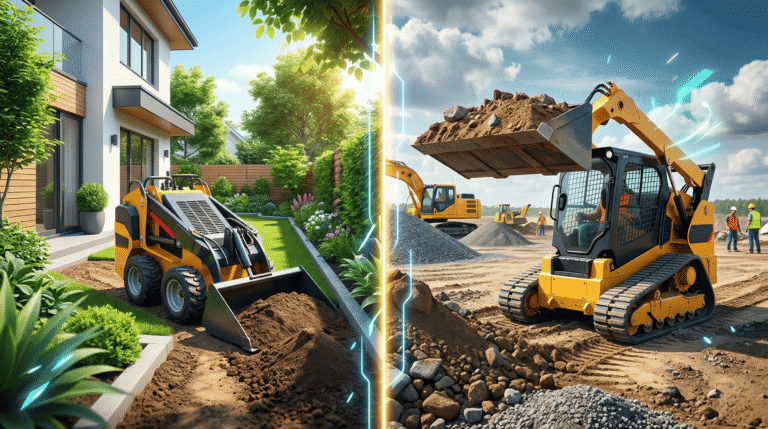
Mini Skid Steer vs Full-Size Skid Steer: What Is the Best Choice for You?
When you invest in heavy machinery, you can turn your worksite from a mess into a well-organized operation. At skidsteerloader.org, we realize that the choice between a Mini Skid Steer vs Full-Size Skid Steer goes much deeper than just size; it is essentially about the machine’s DNA and how it fits with the specific needs of your project.
Whether you are a contractor wanting to make the most of your investment or a homeowner doing a large landscaping project, a wrong frame size will lead to wastage of fuel, the damage of turf, or not enough lifting power.
This detailed guide aims to equip you with knowledge of the major differences, functioning capabilities, and cost implications associated with each option. Which of the two – a Mini Skid Steer vs Full-Size Skid Steer – is your efficiency card will predominantly be a matter of the kind of space that you are dealing with, i.e., whether it is an urban backyard that is cramped or a large commercial construction site with complementing space.
Mini Skid Steer vs Full-Size Skid Steer: The Basic Differences
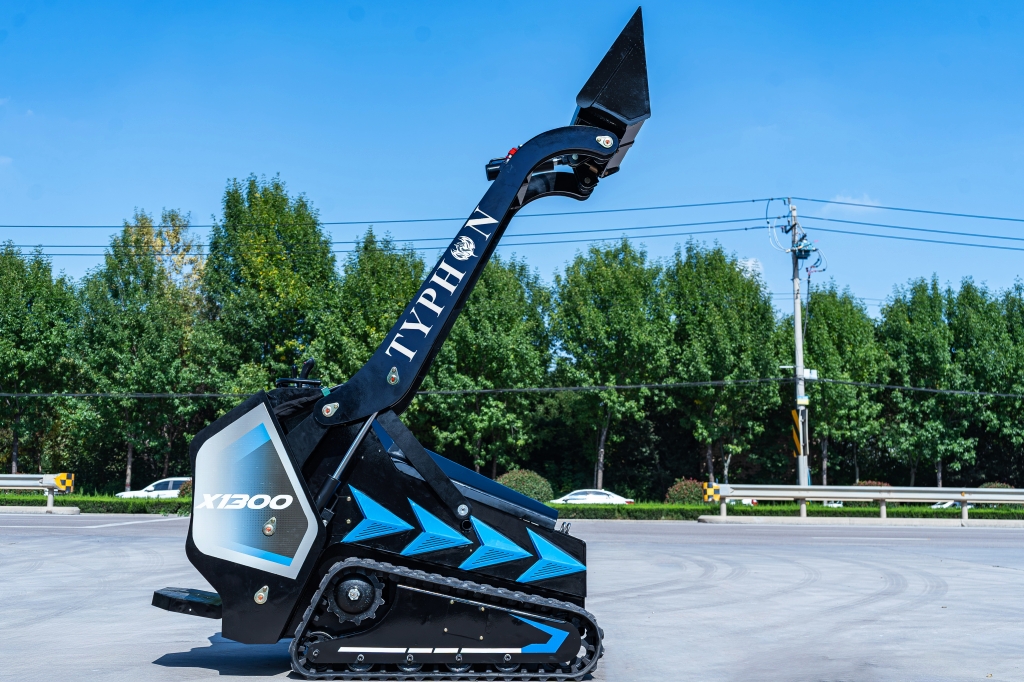
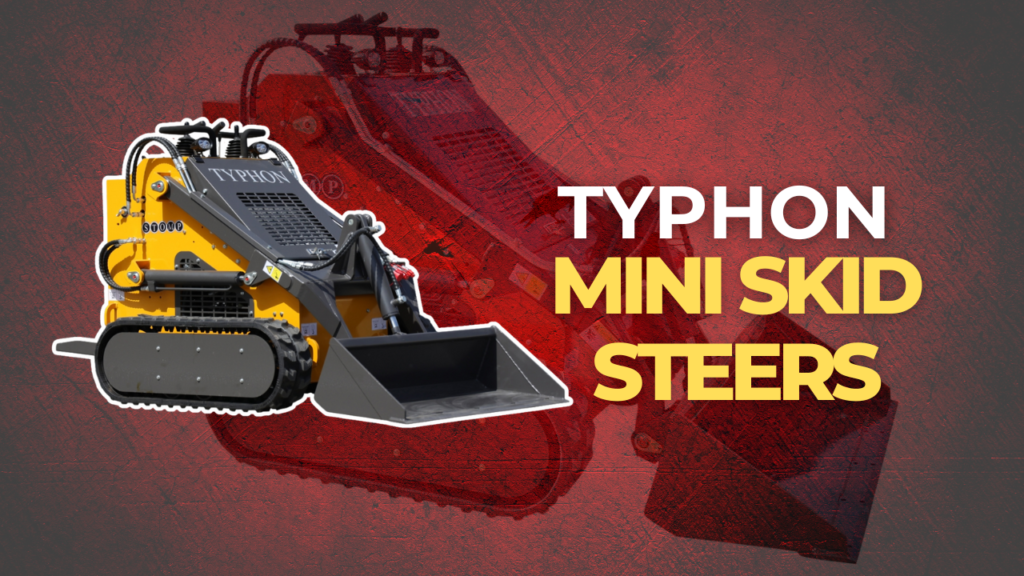
The next distinction that is most obvious is the operator perspective and size. When comparing a Mini Skid Steer vs Full-Size Skid Steer, you first think about how the machines differ in human-machine interaction. Mini loaders are mostly stand-on or walk-behind machines, while full-size loaders offer a cabin, either open or enclosed, where the operator takes a seat.
- Small Size: Mini skid steer can be narrower than 36 to 48 inches which gives them the ability to go through typical garden gates or narrow alleys.
- Operator Visibility: Since you stand at the rear of a mini skid steer on a platform, it consequently means that you get a 360-degree totally clear eye contact with your surroundings and also any other things that are attached.
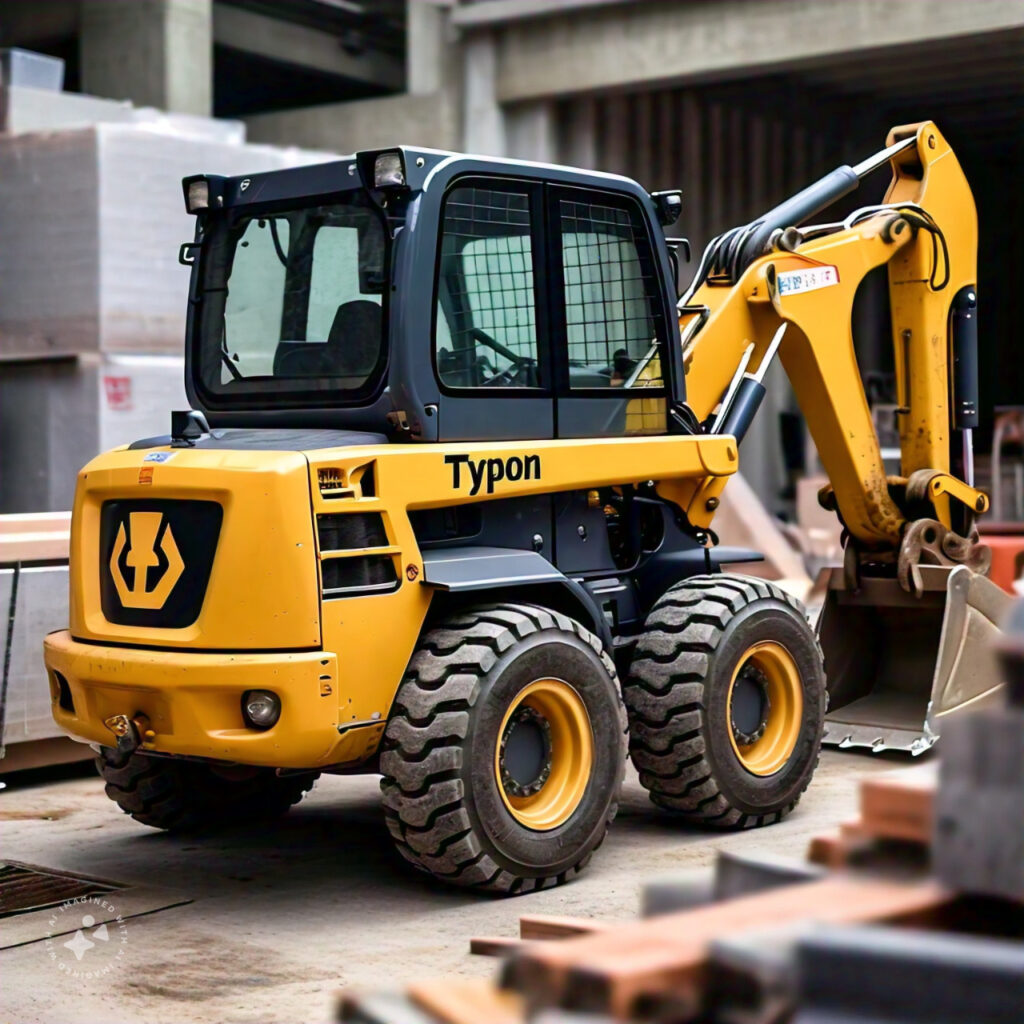
- Impact of Weight: Generally, full-size skid steers are heavier by a large margin (typically in the range of 6,000 to 10,000 lbs), and this weight is what is needed to counterbalance the weight of the gigantic parts when they are lifted vertically.
Features of Mini Skid Steer vs Full-Size Skid Steer
1. Power and Performance: Raw Strength vs. Precision Agility
Most of the time, when you are weighing a Mini Skid Steer vs Full-Size Skid Steer, the deciding factor is power. It can be said that the full-size machines represent the “beasts” where construction is concerned as they are built for earthmoving at a heavy-class level.
The other way to put it is that mini skid steers are tools for precision work which not only gives you the greatest control but can produce more hydraulic flow than one would have thought for their size.
- HP (Horse Power): Most full-size machines fall within the 50 to 100+ HP range, whereas mini models rarely exceed the 20 to 45 HP mark.
- Rated Operating Capacity (ROC): A full-size machine has a safe lift capacity of 2,000 to 4,000 lbs, while in the case of a mini machine, the maximum is anywhere between 500 and 1,500 lbs.
- Hydraulic Power: In spite of their size, a lot of the contemporary mini skid steers come with high-flow hydraulics that enable them to do an excellent job with heavy attachments like trenchers and augers.
2. Maneuverability: Navigating the Modern Job Site
“Skid” in skid steer is a term used to describe how a machine locks the wheels on one side to turn. In the comparison of Mini Skid Steer vs Full-Size Skid Steer, maneuverability is the reason where a mini model stands head and shoulders above the rest.
When your work involves a residential zone with a well-laid landscape, the solution is quite obvious.
- Zero-Turn Radius: Both pieces of equipment are capable of making a 360-degree rotation along their own vertical axes, but the smaller turning circle of a mini machine facilitates work in the confined spaces of a barn or a fenced-in patio.
- Ground Pressure: Mini skid steers (especially the tracked models) apply a much lower PSI to the ground thus preventing “rutting” and soil compaction that usually goes hand-in-hand with the use of heavier equipment.
- Transportability: It is not unusual for people to haul a mini skid steer with a regular pickup truck and a light trailer, in contrast, a full-size unit will require a heavy-duty hauler and possibly even a professional driver’s license, a CDL, depending on the combined weight.
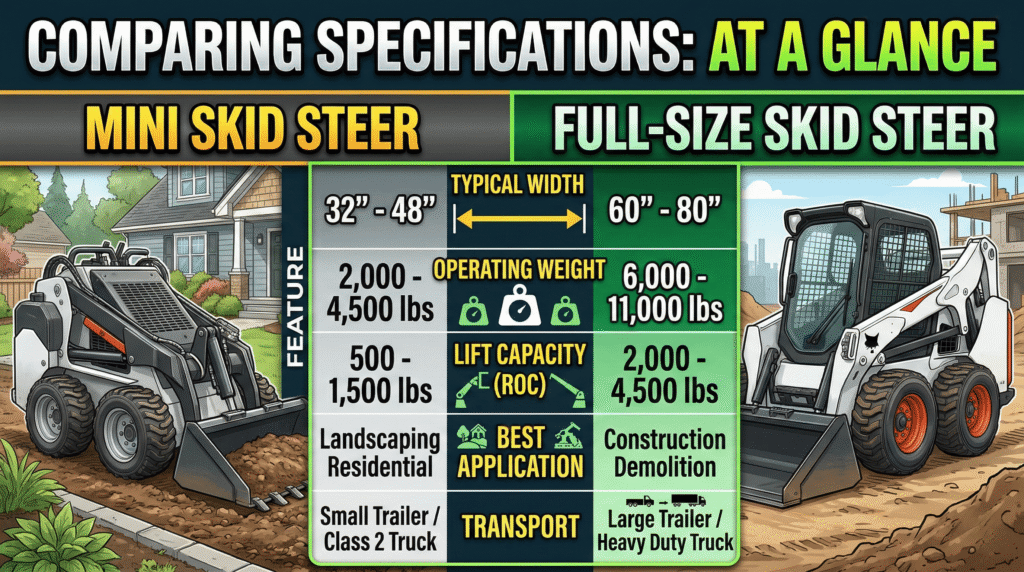
3. Comparing Specifications: Mini Skid Steer vs Full-Size Skid Steer
| Feature | Mini Skid Steer | Full-Size Skid Steer |
| Typical Width | 32″ – 48″ | 60″ – 80″ |
| Operating Weight | 2,000 – 4,500 lbs | 6,000 – 11,000 lbs |
| Lift Capacity (ROC) | 500 – 1,500 lbs | 2,000 – 4,500 lbs |
| Best Application | Landscaping, Residential | Construction, Demolition |
| Transport | Small Trailer / Class 2 Truck | Large Trailer / Heavy Duty Truck |
4. Attachment Versatility: One Machine, Many Jobs
Skid steer loaders are known for their versatility. Nonetheless, whichever variant of the Mini Skid Steer vs Full-Size Skid Steer you opt for, the available attachments can convert your loader into a versatile multi-tool for use at the job site.
- Basic Attachments: Both sizes support buckets, pallet forks and augers though different mounting plates are used (Universal Skid Steer vs. Mini-Universal)
- Specialized Mini Tools: Mini loaders excel with “narrow” attachments like 4-inch trenchers or small stump grinders designed for backyard accessibility.
- Heavy Duty Demolition: Full-size loaders can support massive hydraulic breakers and industrial-scale mulchers that would overwhelm a smaller machine’s hydraulic cooling system.
5. Cost Analysis: Initial Investment and ROI
Money is the first thing we worry about when figuring out what to do. When discussing a Mini Skid Steer vs Full-Size Skid Steer, the pricing aspect is just the tip of an iceberg. The overall ownership cost is impacted by fuel consumption, maintenance, and the transport.
- Purchase Price: Whereas a mini skid steer is mostly a new unit that comes with a 40%-60% less price tag than a brand-new, full-size cabbed unit.
- Operating Costs: Mini loaders significantly reduce the amount of fuel used per hour and their engines are less complicated, thus DIY owners find them easier to maintain.
- Rental Market Demand: Mini skid steers are presently very popular for rental usage thus in the secondary market, they maintain their resale value remarkably well.
6. Environmental Impact and Surface Protection
Contractors nowadays are more and more inclined to minimize the environmental footprint of their projects. The Mini Skid Steer vs Full-Size Skid Steer decision is mostly about how much “rework” you plan to do after the job has been accomplished.
- Turf Preservation: Since the mini loader weighs less, it won’t be responsible for destroying expensive sod or breaking residential driveways as a 10,000-lb machine would do.
- Emissions: Smaller engines result in less pollution. Besides that, the launch of electric mini skid steers has made them the most preferred option for indoor demolition and environmentally friendly job sites.
- Noise Levels: By operating at lower decibels, smaller machines hold a substantial advantage especially when the work is carried out in neighborhoods that are sensitive to noise or near schools.
7. Which Is the Right One for You?
Whether to go for a Mini Skid Steer vs Full-Size Skid Steer really depends on what your “normal” day at work is like. If 80% of your time is spent cleaning up a 10-acre parcel of land and loading tri-axle dump trucks then a full-size loader will be the tool for you.
But, if the problem you have most of the time is that gates are too narrow or you have to keep repairing the lawn that you damaged, then you should probably invest in a mini skid steer.
- If you opt for Mini: You are focusing on accessibility, easy transporting, and low ground disturbance.
- If you opt for Full-Size: You require maximum breakout force, high lifting heights, and climate-controlled cab for all-day comfort.
- The Hybrid Approach: The trend nowadays for the most efficient companies is to have one of each in their fleet so that they can still take on any job regardless of what limitations their equipment may have.
FAQ’s – Mini Skid Steer vs Full-Size Skid Steer
Can a mini skid steer lift a pallet of sod or bricks?
The lifting capacity of most mini skid steers ranges between 500 and 1,500 lbs. Although they can accommodate half-pallets or light loads, a regular pallet of sod that usually weighs 2,000-3,000 lbs will require a full-size skid steer.
Do I need a special license to operate a mini skid steer?
For the most part, a special license will not be necessary if you are only going to use it for private purposes. However, commercial work is different in that OSHA mandates the provision of safety training. Transportation of a full-size skid steer may also call for a CDL if the combined weight of the truck, trailer, and machine is more than 26,001 lbs.
Which is better for snow removal: mini or full-size?
Mini skid steers are better suited for snow removal from sidewalks and small residential driveways. On the other hand, full-size loaders can clear large commercial parking lots faster, especially the ones with bigger buckets.
Are tracks better than wheels on a mini skid steer?
If you want to get the most out of your mini loader, go for tracks as these give better stability, lower ground pressure, and more traction on the soft surfaces that are common in landscaping projects.
How much can I save on fuel with a mini skid steer vs full-size?
Generally, mini skid steers burn about 1 to 2 gallons of fuel per hour, whereas a huge loader may consume up to 5 gallons, depending on the load, which, over an extended project, will lead to significant savings.
Can a mini skid steer load a high-side dump truck?
Normally, mini loaders have a hinge pin height of 70 to 85 inches. This is usually not sufficient to go over the sides of a large dump truck. To do that, you would require a full-size vertical lift skid steer.
Is a stand-on mini skid steer safer than a sit-down model?
They both offer safety features. Stand-on models give the operator the option to “step off” quickly in an emergency, further they afford better visibility, whereas with the sit-down full-size models, a ROPS (Roll-Over Protective Structure) cage is provided for maximum impact protection.