Understanding Skid Steer Stability: Center of Gravity and Load Charts
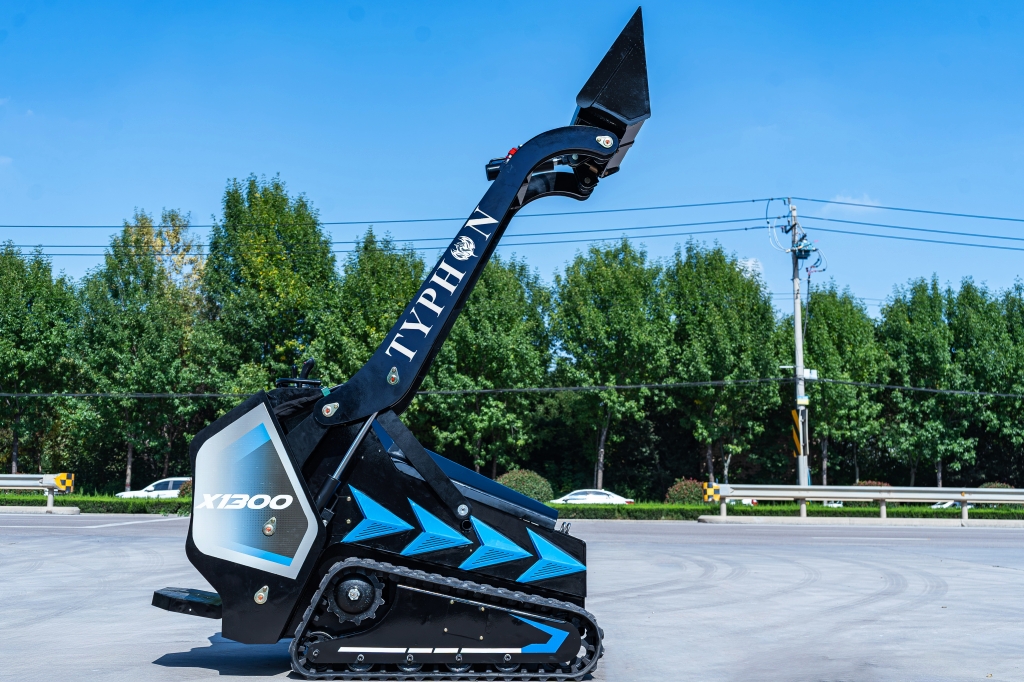
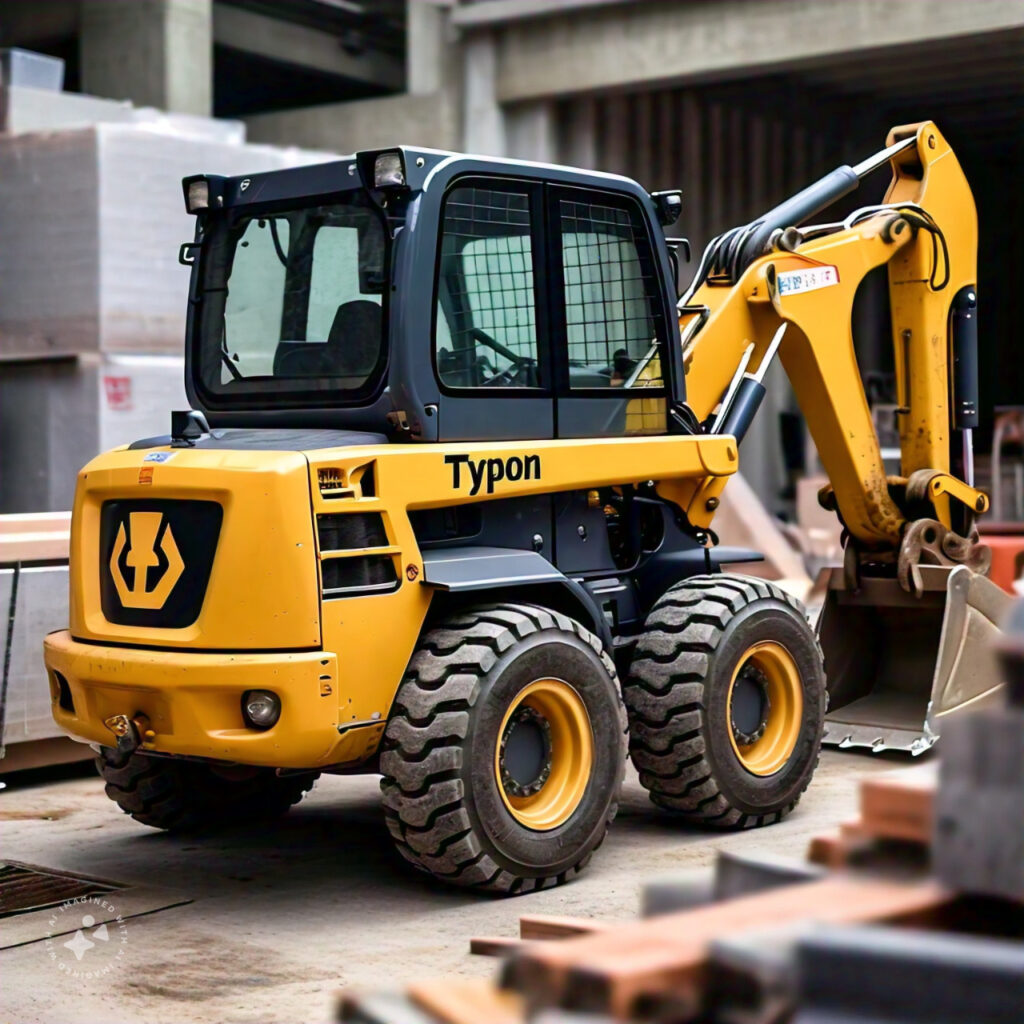
The skid steer loader is truly one of the most adaptable tools on a construction site. Nevertheless, the small size and the specific steering system of the skid steer make it essential to have a profound understanding skid steer stability.
Operating a skid steer goes far beyond just knowing how to move the joysticks; it requires a thorough understanding of physics, mainly the Center of Gravity (CoG) and its change during the operation.
When you load up a bucket of wet gravel and lift it, or you drive over a slightly inclined surface, the invisible forces affecting your machine change immediately. If you ignore these physical limits, you are very likely to experience “tipping,” which is an accident that can cause the equipment to be damaged, property to be destroyed, and even the operator being fatally injured.
Skid steer stability is not something static but a very dynamic factor. This equipment lacks a traditional suspension system and is based on a rigid frame which means that any movement of the lift arms or change in the weight of the load will have a direct influence on the balance of the machine.
Operators should be trained on how to map the location of the weight concentration at all times in their minds. This article is an effort to explain skid steer stability by taking into account how the center of gravity works with load charts to maintain safety and efficiency of operations in any kind of location.
What is the Center of Gravity (CoG)?
Center of Gravity (CoG) indicates the point at which the complete weight of the skid steer including its load can be considered to be concentrated. For an idle and empty skid steer, the CoG is usually found in the rear half of the machine close to the ground which is the reason why the heavy engine is placed at the back to act as a counterweight.
However, the moment you grab a load and lift the arms, that CoG comes forward and up. If the CoG is outside the “stability triangle” (i.e. the triangle formed by the points where tires touch the ground), then the machine will tip over.
Knowing where and how to control this moving point is what separates the professional from the beginner. When arms are lifted, the machine becomes less stable because the CoG is higher already, and so it will not take much for the machine to tip if it hits a bump or turns sharply. For that reason, safety instructions always suggest carrying the load as close to the ground as possible.
- Weight distribution: Skid steer is designed to have a weight bias to the rear (usually a 30/70 front-to-rear split) to compensate for the weight of the bucket load.
- Stability triangle: It is the geometric shape circumscribed by the two front wheels and the pivot point of the rear axle; ensuring that the CoG remains within this triangle avoids rollovers.
- Dynamic forces: Centrifugal force during rapid turns or the momentum of sudden braking may “throw” the CoG out of the safe zone even if the load weight is within limits.
Reading the Skid Steer Load Chart
Knowledge of the Load Chart Make sitting the load as far back as possible in the bucket or close to the uprights of forks minimizes leverage on front axle.
On the operator’s manual, or sometimes on a sticker inside the cabin, every manufacturer will have provided a load chart. The chart is the most valuable document for an operator because it describes the Rated Operating Capacity (ROC). ROC is half of the “Tipping Load” — i.e. the maximum weight at which the rear wheels lift off the ground when the lift arms are raised fully. Inadequately exceeding these limits draws a dangerous scenario with no safety margin left for accidental handling at uneven ground.
The chart has not just the weight of the material but also the kind of attachment used forming part of the itemization. Ann operation with a heavy hydraulic breaker or a large pallet fork causes changes in the base weight of the machine in different ways compared to a normal dirt bucket. The weight of additional specialized attachments should be subtracted from the total ROC to find out the safe working capacity for actual material.
- Rated Operating Capacity (ROC): It is the weight limit set by the manufacturer that one can safely work with, usually based on a hard, level surface; for a soft or inclined surface, this value is to be adjusted downwards.
- Tipping Load Identification: Going through operator training should result in understanding that reaching the tipping load is the failure point while ROC is a safety margin, created to prevent operating at tipping load.
- Attachment Offset: Different attachments change the load’s distance from the front axle, which has a major impact on leverage and skid steer stability.
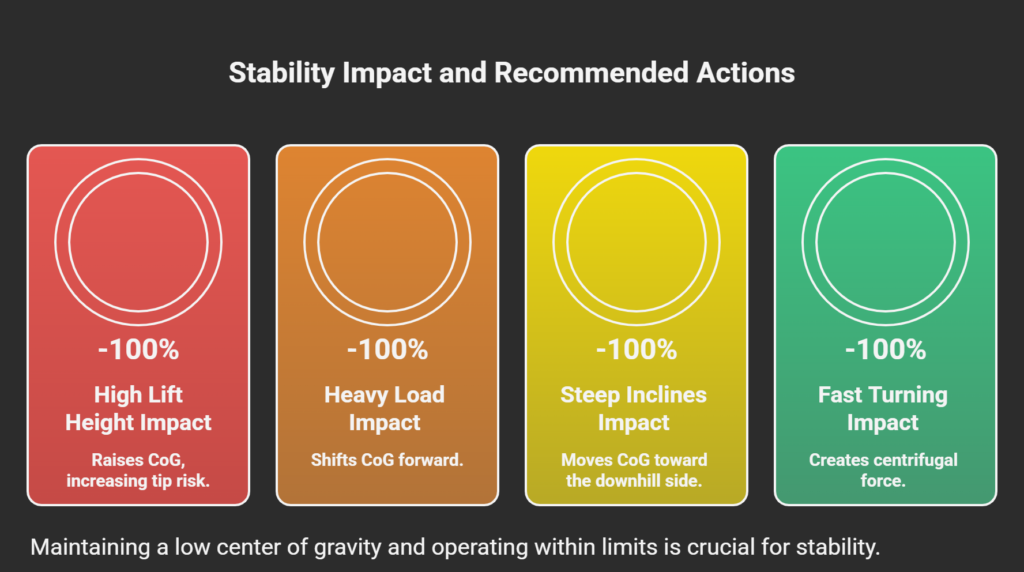
Table: Skid Steer Stability Impact
| Feature | Impact on Stability | Recommended Action |
| High Lift Height | Raises CoG, increasing tip risk | Keep bucket low during transport |
| Heavy Load | Shifts CoG forward | Never exceed Rated Operating Capacity (ROC) |
| Steep Inclines | Moves CoG toward the downhill side | Always drive with the heavy end pointed uphill |
| Fast Turning | Creates centrifugal force | Slow down before initiating a turn |
Factors Influencing Skid Steer Stability on Job Site
You may have a skid steer machine that is stable on a concrete floor but it can very well lose its balance and become dangerously unstable on an outdoor, muddy construction site – this is a very common situation that you have to keep in mind. Surface conditions have a huge effect on the way weight of the machine is distributed.
So, for instance, if a side of the loader sinks into soft soil while you are carrying the load at the full height – in this case, the CoG will move laterally and this could trigger a side-rollover, which is usually more dangerous than a forward tip.
Besides, the concept of “moment of force” is very important here. The load is like a lever: if you move it farthest away from the front tires (the fulcrum), it will become “heavier” in terms of leverage.
That explains why it is much more dangerous to use long pallet forks to lift a heavy crate from the tips rather than keeping the crate tight against the carriage.
- Ground condition: Soft mud, gravel, or ice reduce the traction and “footing” of the stability triangle, which make the machine susceptible to sliding or tipping.
- Slope management: The heavy end of the machine (rear when empty, front when loaded) should always be at the top of the hill to keep the CoG centered.
- Bouncing and jarring: Loads “bounce” over objects or curbs, which effectively increases the weight of the load momentarily and can snap the CoG out of the stability zone.
Best Practices – Maintaine the Balance of the Machine with Skid Steer Stability
Keeping safety measures at the highest level leads to what is called the “stability-first” mentality. The first step in this process is a pre-operation inspection to confirm tires have the right pressure, because if one tire is deflated the machine will lean and the CoG will be shifted.
Besides this, it is very important to make sure the movements are smooth. Contrary to that, jerky movements with hydraulic controls can cause “shock loads” that exceed the load charts safety margins.
Another effective technique that you could apply is called “counterweighting.” Some machines even offer the option of adding rear weights to increase ROC. This not only gives you the opportunity to lift heavier loads, but also changes empty machine handling, as it becomes more likely to tip backward when moved up a steep incline without a load.
- Smooth Hydraulic: When the lift arms are raised, avoid sharp stops or starts to prevent the momentum from shifting the CoG.
- Tire Pressure Guarantee: All tires should at manufacturer’s recommended PSI for giving a level and a stable base for the stability triangle.
- Load Positioning: Always place the load as far back in the bucket as possible or as close to the fork uprights to counterbalance the front axle leverage.
Negligence of Skid Steer Stability Limits Can Cost You Your Life
Skid steer tip-over can cause serious physical injuries. Besides the crushing injuries that the operator can get in a tip, there are also other “side-effect” like fluid spills, engine damage, and bent lift arms. Hydraulic systems may be disrupted and engine can become “hydro-locked” if oil or coolant enters to cylinder while machine is in tip-over position.
From the point of view of legal responsibility, violating the load chart and stability rules can get you into trouble with OSHA and result in higher insurance premiums.
But the most important of all is that a safety culture on a jobsite is maintained when every operator respects the physics of the machine. Skid steer is a machine/tool and not a toy so its power needs to be balanced by a deep respect of the Center of Gravity (CoG).
- Operator Ejection: A tip-over without seatbelt or ROPS (roll-over protective structure) almost always results in operator being thrown out of the cabin.
- Structural Damage: Tipping can lead to bending of loader arms or quick-attach system that can cause expensive repairs and downtime.
- Legal Liability: Not following the load chart is quite commonly mentioned as “operator negligence” in case of accident investigation.
Frequently Asked Questions (FAQ) – Skid Steer Stability Performance
What different sets Tipping Load apart from Rated Operating Capacity (ROC)?
The tipping load is the exact weight that causes the rear wheels of the skid steer to lift off the ground. Rated Operating Capacity (ROC) is a safety-rated fraction of that weight (usually 50% in skid steers) to keep the machine stable during operation.
How do I locate my load chart?
Load charts are always available from the operator’s manual which manufacturers supply. Also, it is quite likely for your machine to have a heavy-duty decal inside the cabin or on the loader arm listing both ROC and tipping load.
Can I boost the load capacity of my skid steer with counterweights?
Rear masses can be used for increasing the ROC, however, nothing should be done without manufacturer-approved weights. The machine, when empty and especially traveling on inclines, can become too unstable if the rear is over-weighted.
What is the reason behind my skid steer feeling “tippy” when the bucket is empty and I am going uphill?
Near 70% of the skid steer weight is in the rear; when you are empty, going uphill shifts the CoG even farther back. For safety’s sake, always back up hill when empty so that the heavy end remains “uphill.”
How can pressurized cabs or different attachments affect the CoG?
Any change including a glass cab or a heavy attachment like a brush cutter will alter the base CoG. It is important to subtract the extra weight of these components from your overall lifting capacity in order to stay safely within limits.
Is there a difference in stability between a compact track loader (CTL) and a skid steer?
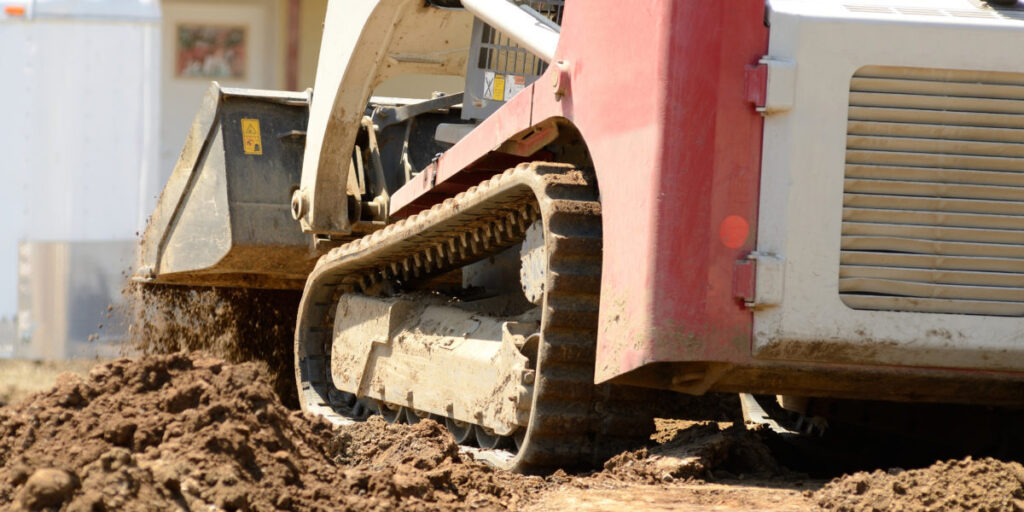
Indeed. The principles of CoG remain the same, but generally, track loaders have a wider stability footprint and a lower CoG which makes them more stable on slopes and on soft ground than wheeled skid steers.
What if the skid steer tips forward?
You should drop the lift arms as soon as possible. By getting the load down, you will be lowering the CoG and shifting it backward towards the rear so that the rear wheels will usually be placed back on the ground again.