The Ultimate Guide to the Skid Steer Mulcher: Change the Way You Manage Your Land
The skid steer mulcher is one of the most useful tools for clearing land and managing forests efficiently. This powerful attachment has changed the way property owners and contractors deal with overgrown plants. It can turn thick brush and standing trees into nutrient-rich mulch in just one pass.
We know that picking the right mulching head isn’t just about how powerful it is. It’s also about making sure that the attachment works well with your machine’s hydraulic system so that it lasts as long as possible. The skid steer mulcher is more flexible and faster than any other way to clear land, whether you are reclaiming a neglected pasture or keeping utility right-of-ways clear.
Learning about the different kinds of skid steer mulcher attachments
There are many different types of forestry attachments on the market, but skid steer mulchers usually fall into one of two main groups: drum mulchers and disc mulchers. Each design has its own strengths that depend on the type of land and the kind of material you want to work with.
Drum mulchers are the best way to get a smooth, finished look. They have a horizontal rotor with teeth that grind up the material. Disc mulchers, on the other hand, use a big, fast-spinning disc to “fling” and shred trees. This makes them very quick for clearing land, but they often leave a messier debris field.
- Drum Mulchers: These are great for making a fine mulch and can grind stumps down to the ground.
- Disc Mulchers: These are great for quickly cutting down big trees and are best for clearing areas with a lot of trees where a polished finish isn’t as important.
- Tooth Options: You can choose between carbide teeth, which are better for cutting through rock, and steel knives, which cut through soft wood faster and more sharply.
Important Hydraulic Needs for Your Skid Steer Mulcher
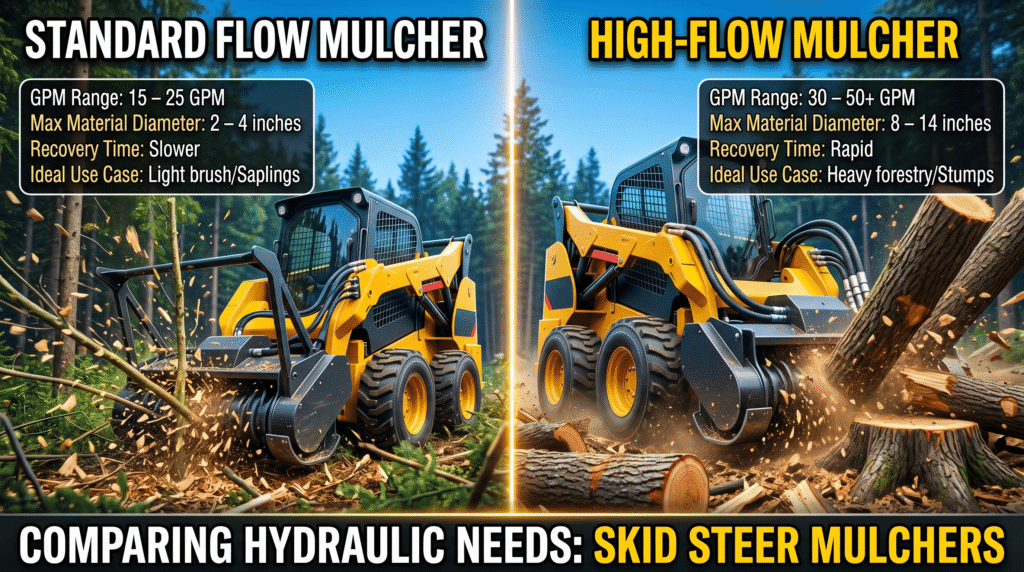
One of the most common mistakes operators make is using a high-performance skid steer mulcher with a loader that doesn’t have enough power. You need to know the difference between standard flow and high-flow hydraulics in order to use these attachments correctly.
Most professional-grade mulchers need high-flow systems that can handle between 30 and 50 gallons per minute (GPM). If the flow and pressure aren’t right, your drum will stop working a lot, which will cause it to overheat and possibly damage the hydraulic pumps on your skid steer.
- High-Flow vs. Standard Flow: If you want to use a drum mulcher on trees that are bigger than 4 inches, make sure your loader has high-flow hydraulics.
- Case Drain Lines: Most skid steer mulcher attachments need a third “case drain” line to relieve back pressure and keep the hydraulic motor safe.
- Cooling Systems: Mulching makes a lot of heat, so make sure your skid steer’s cooling system is clean and can handle high loads for a long time.
Table: Comparing the Hydraulic Needs of Mulchers
| Feature | Standard Flow Mulcher | High-Flow Mulcher |
| GPM Range | 15 – 25 GPM | 30 – 50+ GPM |
| Max Material Diameter | 2 – 4 inches | 8 – 14 inches |
| Recovery Time | Slower | Rapid |
| Ideal Use Case | Light brush/Saplings | Heavy forestry/Stumps |
Benefits of Forestry Mulching for Performance
Why should you use a skid steer mulcher instead of a bulldozer or a chainsaw crew? There are more benefits than just speed. Forestry mulching is a way to clear land that is good for the environment and doesn’t change the structure of the soil.
The skid steer mulcher doesn’t make huge burn piles or take trash to the dump. Instead, it leaves a carpet of mulch that keeps the soil from eroding and puts nutrients back into the ground. This “one-step” process cuts down on the number of machines you need, which lowers your overhead costs on any site preparation project.
- Erosion Control: The mulch layer keeps the topsoil safe from wind and rain right after clearing.
- Cost Efficiency: It gets rid of the costs of hauling, tipping fees, and fixing up the site.
- Selective Clearing: A skid steer is easy to move around, so you can get rid of invasive species without hurting “keeper” trees.
How to Take Care of Your Mulcher to Make It Last Longer
A skid steer mulcher is a big investment, and the place it works in is very rough, with dust, wood chips, and rocks that are hard to see. The only way to make sure your attachment keeps working is to take care of it regularly.
We suggest a “walk-around” inspection every day at skidsteerloader.org. Pay close attention to the teeth on your rotor. If one tooth is missing or broken, the rotor will be out of balance, which can cause violent vibrations that can break bearings and hydraulic seals in just a few hours.
- Taking care of Attachment teeth: Sharpen steel teeth every day or switch out carbide teeth to make sure they wear evenly and cut the best.
- Daily Greasing: Every 8 to 10 hours of use, grease the main rotor bearings to get rid of dirt and other particles.
- Belt Tension: Check the tension of the drive belt once a week. A belt that slips makes it harder to transfer power and makes too much heat.
Safety Rules for Using a Skid Steer Mulcher
Using a skid steer mulcher is dangerous because it throws debris out at high speeds. You need to put safety first. Most manufacturers say that bystanders should stay at least 300 feet away from a disc or drum mulcher because it can throw wood or rocks at deadly speeds.
Also, your skid steer needs to have a special forestry kit that includes a shatterproof polycarbonate door (Lexan) and extra protection for the hydraulic lines.
- Polycarbonate Doors: Don’t use a standard glass door on a mulcher; the fast-moving debris can easily break it.
- Safety Restrictions: To keep bystanders safe, there should be a strict “no-entry” zone within 300 feet of the machine that is in use.
- Engine Clean: To keep fires from starting, wood dust is very flammable. Clean the engine compartment and exhaust area of your skid steer every day.
How to Pick the Best Brand for Your Skid Steer Mulcher?
The market for the skid steer mulcher has become very specialized by 2026. Fecon, FAE, and Virnig are some of the best brands when it comes to rotor technology and hydraulic efficiency.
When choosing a brand, think about how easy it is to find replacement parts in your area. A broken tooth or a snapped belt can stop your project, so it’s just as important to have a reliable dealer network as it is to have the right specs for the skid steer mulcher.
- Fecon Bull Hog: Known for being very durable and having a lot of different tooth options for different types of soil.
- FAE Group: Their advanced sonic hydraulic technology automatically changes the drum’s speed and torque.
- Virnig V70 Series: The Virnig V70 Series is a great choice for contractors who need high-flow performance and strong drum housings.
FAQs – Skid Steer Mulcher
How much does a mulcher for a skid steer cost?
The price of a professional-grade skid steer mulcher can be anywhere from $15,000 to $45,000, depending on the width, hydraulic flow needs, and tooth arrangement.
Is it possible for a standard flow skid steer to run a mulcher?
Yes, but only to a point. Standard flow mulchers are made to handle small saplings and light brush, usually ones that are less than 3 to 4 inches thick. For heavy forestry work, high flow is a must.
What size tree can a skid steer mulcher cut?
Most high-flow drum mulchers can cut down trees with trunks up to 8 inches in diameter, and some disc mulchers can cut down trees with trunks up to 14 inches.
How often do I need to change the teeth on my mulcher?
This is based on the soil and the material. You might have to change or turn the teeth every 50 to 100 hours if the soil is rocky. They can last a lot longer in clean wood.
Does my skid steer need a special door to use a mulcher?
Of course. A polycarbonate door that is 1/2 inch or 3/4 inch thick is needed to keep the operator safe from flying debris that the skid steer mulcher throws out.
Is a disc mulcher better than a drum mulcher?
It all depends on what you want to do. For speed and clearing large areas quickly, use a disc mulcher. For a finer finish and stump grinding, use a drum mulcher.
Does mulching in the woods stop new growth?
The heavy layer of mulch doesn’t kill the roots, but it does stop new weeds from growing. You can then use light herbicide or mowing to keep the weeds from coming back.