Why a Skid Steer Loader for Small Business is the Best Investment
When you’re running a growing business, the appropriate capital investments might be the difference between stagnation and scalable success. For many builders, landscapers and agricultural entrepreneurs, the prospect of investing in a skid steer loader for small business operations could seem like a major first financial obstacle.
But this machine, this behemoth, is intended as the backbone of a money-making operation. Business owners need to understand that a skid steer loader is not just an expenditure, but a flexible, revenue-generating tool that pays for itself time and time again.
When used properly, with the right attachments and maintained according to the guidelines on skidsteerloader.org, this small heavy machine dramatically reduces operating costs and opens the door to extremely profitable contracts that otherwise would be completely out of reach.
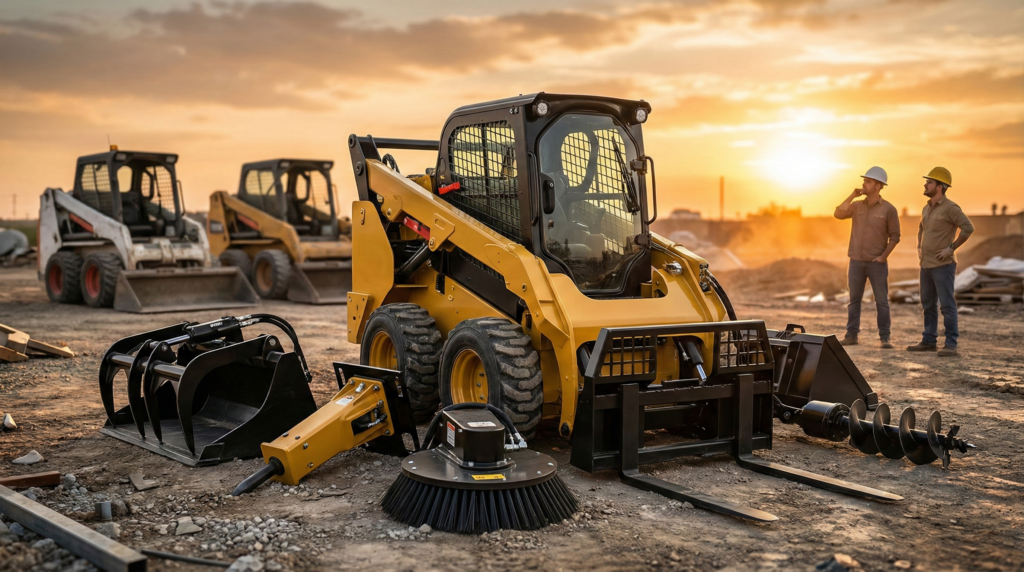
To optimize your investment you need to think of this equipment as a multi-purpose tool:
- Instant Service Expansion: Instantly go from basic material handling to more complicated landscaping, demolition or grading operations.
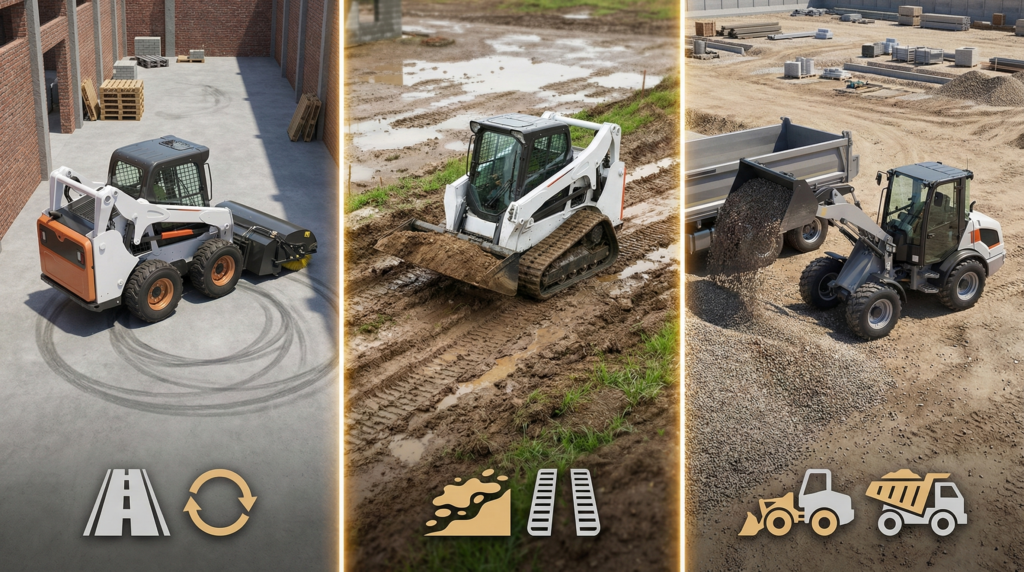
- Unrivaled Operational Agility: Navigate easily in narrow home backyards or busy urban building sites where bigger machines cannot fit.
- Long-Term Equity Building: Retain great resale value and leverage beneficial depreciation tax regulations to offset your yearly commercial profits.
Turning Versatility into Consistent Profitability
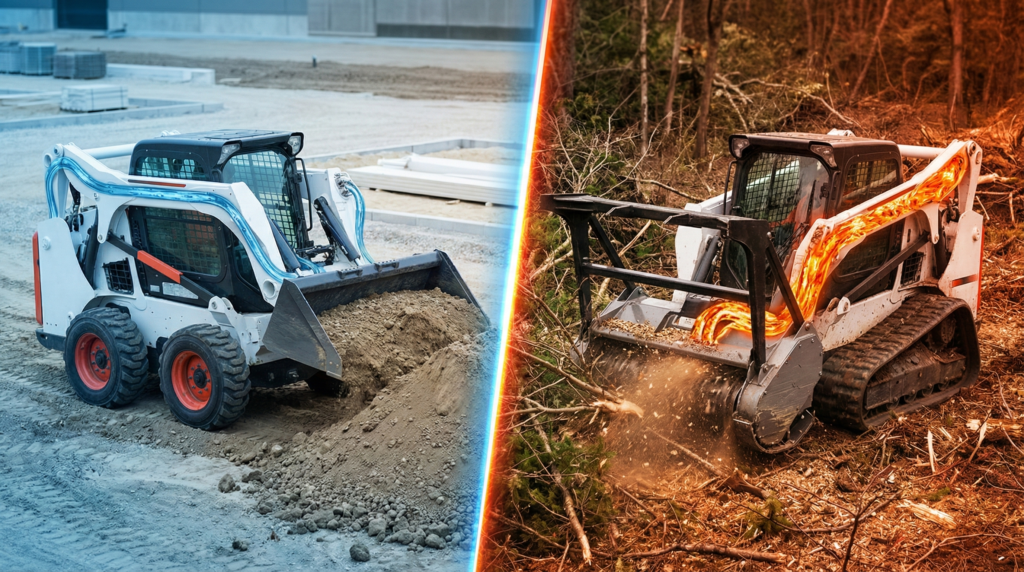
The main reason a skid steer loader for small business owners has such a fast return on investment is its tremendous adaptability. A skid steer loader is used in all the different stages of a project on a continuous basis, unlike to specialized heavy equipment which is used for one job and then lies idle.
Just replace a bucket with one of the 10 must-have attachments we mentioned on the SkidSteerLoader.org, and you can go from digging foundation trenches in the morning to cleaning streets or plowing snow in the afternoon with one operator.
This remarkable flexibility means you’re not compelled to engage different machinery or specialist subcontractors to undertake different phases of a project. The ability to have the complete process in-house increases your profit margins tenfold, guaranteeing that the machine is making money every day it is on the job site.
This is how adaptability immediately translates to your bottom line:
- Reduce equipment rental costs: No more sourcing, transportation and daily fees for specialist equipment such as trenchers, forklifts or bulldozers.
- Seamless Seasonal Transitions: Effortlessly change attachments to go from summer landscaping packages to winter snow removal off-season revenue ideas.
- Asset Optimization: Always ensure your capital investment is operating and not sitting idle in a storage yard during slow project periods.
Cutting Labor Costs and Accelerating Workflows
The economy today is competitive and it’s becoming harder to obtain dependable manual labor. The expenses of payroll, insurance and worker compensation are continuing to rise. Skid Steer loader For small business operations, the advent of a skid steer loader relieves these huge cost burdens, since it allows one operator to do the job of a full staff in a tiny fraction of the time.
Be it lifting big materials, grading huge land tracts or restoring riverbanks and erosion management, the sheer hydraulic force and lifting capability of a skid steer totally changes the game for your everyday production.
Completing projects quicker allows your organization to bid on and obtain more work throughout the year with confidence, increasing your total yearly income without having your personnel costs swell proportionately.
Examine the benefits of running this little equipment in terms of direct labor:
- Exponential Productivity Gains: Perform earth-moving or demolition work that would take a manual team several days to complete, in only a few hours.
- Reduction of Injury and Liability: Reducing the physical burden on your personnel may reduce costly workplace injuries and insurance rates.
- Competitive Bidding Power: Reduce your projected labor expenses on project bids so that you may outbid your more labor-intensive rivals.
Unlock High Paying Side Hustles & Specialized Contracts
One of the best ways that you can make sure your skid steer loader pays for itself quickly is via pursuing niche, high paying side hustles and specialized business contracts. Our new findings at skidsteerloader.org reveal that operators may quickly boost their revenues by taking on small-scale mining activities, large forestry mulching projects and unique spring landscaping packages.
This equipment is very rugged and can work in terrible situations, so company owners can get into emergency debris removal after storms, profitable commercial snow clearing contracts in the winter, and high margin agricultural feed management jobs. When you look at the hourly rates that customers are ready to pay for these specialized heavy duty services, it becomes painfully evident that the machine will soon pay for its own financing expenses and become a pure profit producing machine.
Here are a few profitable areas to give you an idea of the potential:
- Disaster Recovery and Debris Removal: Clear fallen trees and building debris after severe weather occurrences at premium emergency rates.
- Commercial Snow and Ice Management: Sign long-term winter contracts with retail malls and office parks to ensure income flow in the off season.
- site Clearing and Erosion Control: Work with local municipality or private developers for environmental stability and extensive site preparation.
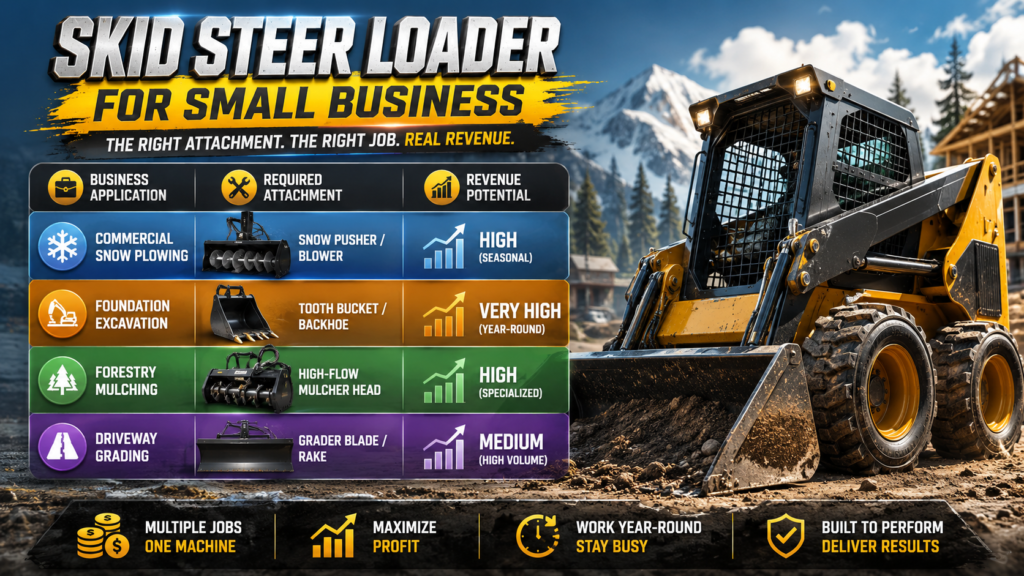
Revenue Potential Business Application Required Attachment
| Business Application | Required Attachment | Revenue Potential |
| Commercial Snow Plowing | Snow Pusher / Blower | High (Seasonal) |
| Foundation Excavation | Tooth Bucket / Backhoe | Very High (Year-Round) |
| Forestry Mulching | High-Flow Mulcher Head | High (Specialized) |
| Driveway Grading | Grader Blade / Rake | Medium (High Volume) |
Strategic Maintenance for Minimal Downtime
A skid steer loader for small business development is only lucrative when it’s actively functioning on the job site. A broken-down equipment is a major liability that eats into your budget via missed work and costly emergency repairs. It is thus extremely essential to properly maintain your skid steer for a great return on investment.
Skidsteerloader.org’s maintenance guidelines emphasize maintenance tips for skid steer operators. Operators need to be very careful to know the correct time to repair important components such as hydraulic filters, high-pressure hoses and pivot bushings that are prone to wear.
There are several things you can do to avoid catastrophic failures from happening. Following a strict preventive maintenance program, accurate evaluation of hour meters, closely watching center of gravity of your machine and load charts to prevent structural stress. This concern for detail guarantees a long working life keeping the equipment out of the repair shop and in the field producing money.
Essential maintenance practices to safeguard your investment:
- Fluid and Filter Checks: Check and replace fluids according to manufacturer requirements to prevent contamination of engine and hydraulic system.
- Undercarriage and Tire Inspections: Weekly inspections of tires and track debris to prevent costly repairs and traction loss.
- Greasing Pivot Points: All loader arms and attachment joints should be greased liberally on a regular basis to minimize friction wear and mechanical seizure.
Enhance Tax Benefits & Retain Resale Value of the Skid Steer Loader For Small Business
A skid steer loader for small business initiatives provides significant hidden financial benefits from tax rebates and exceptional asset depreciation retention, beyond the direct income produced from everyday operations.
Various governments provide favorable tax rules in various countries, such as Section 179 in the United States, that enable small business owners to deduct the entire purchase price of qualifying heavy equipment in the very first year that it is put into operation.
This huge tax deduction may cut your company’s ultimate tax bill down to size, and it can seem like the government is paying the lion’s share of your original investment. And a properly cared-for skid steer, particularly one with a solid service history that verifies hour meters, has a tremendous resale value in the thriving used equipment market and makes for a powerful liquid asset should you ever need to upgrade or sell.
Financial techniques to optimize the budgetary effect of your equipment:
- Accelerated Tax Deductions: Get a good business accountant to write-off the purchase price of the equipment against your yearly earnings.
- Build company Equity: Use the heavy gear as collateral to secure future company development loans or lines of credit.
- lucrative Upgrading: Sell your well-maintained old skid steer after years of lucrative service and recover a big part of your original cash.
FAQs on Skid Steer Loader for Small Businesses
What is the cost of a skid steer loader for a small business?
A modern skid steer loader may cost anywhere from $30,000 to $80,000 depending on horsepower, lift capacity and tech features such as enclosed booths and high-flow hydraulics. Used models with good hours may easily be obtained in the $15,000 to $40,000 range, making them rather affordable to startups.
What are the greatest skid steer accessories for making money?
The highest-profit attachments include forestry mulchers, which are used for land clearance; snow pushers, used for winter commercial contracts; and augers, which are used for fence and foundation drilling. These are the very technologies that enable operators to charge premium hourly rates for highly skilled work.
Is a skid steer loader worth purchasing for a small business?
Yes, it is regarded one of the finest heavy equipment investments because of its exceptional adaptability that enables it to replace many specialist machines. It cuts personnel expenses substantially and enables companies to expand their services offering to other seasons.
How fast will a skid steer pay for itself?
With strong marketing, a comprehensive slate of commercial contracts and a wide selection of attachments, a fully used skid steer may pay for itself in as little as 12 to 18 months. Work done in the off season, such snow removal, really speeds up this schedule.
Best Small Business Ideas Using a Skid Steer?
Top business opportunities: niche landscape leveling, after-storm catastrophe restoration, limited demolition, business snow removal, community farming material transport.
Should a Small Business Buy or Lease a Skid Steer Loader?
If you need the equipment for day to day core business such as regular gardening or construction, buying or financing the machine is considerably more cost efficient in the long run. Rent only if you require a machine for a unique, extremely particular one-off job.
How much does it cost to maintain a skid steer loader?
Maintenance expenditures are usually $ 1000 to $ 3000 per year, including regular oil changes, topping up hydraulic fluid, changing filters, and sometimes replacement of worn tires or tracks. Preventative maintenance is crucial to keeping these expenses down on the lower end of the range.
- Safety First: Remember, always using the best safety features protects your operators and saves your firm from severe liability litigation.
- Strategic Growth: Turn your jobsite efficiency around and increase your business’s reach with your skid steer as the key driver.