How to Evaluate Hour Meter and Maintenance Records on Used Skid Steers
Buying a used skid steers is an excellent way to get equipment at a lower price for either expanding your fleet or doing major property development. However, if you buy a used machine without any knowledge, you might lose a lot of money. Heavy equipment life is only measured by running hours, a fact that differentiates it from passenger vehicles that show their wear and tear in miles or kilometers.
Yet the running hours displayed on an hour meter are only one aspect of the truth. To avoid purchasing a machine that gives you one problem after another, it is necessary to verify that the running hours on the meter match with the maintenance records of the machine. Knowing how to evaluate hour meter and maintenance records on used skid steers helps in identifying a well-maintained workhorse as opposed to an over-worked liability.
Evaluate Used Skid Steer Loaders Meter Maintenance
Many buyers make the mistake of buying a used machine with a low number of working hours and expecting it to be in perfect condition. Unfortunately, this is not always true. For example, a machine left idling in a rental yard for several hours or one that was used intensively without regular fluid changes can be in much worse condition than a used machine that has been well looked after by its owner.
By studying the dashboard thoroughly, checking when the machine was last serviced, and looking at the past payment records, one can figure out the real condition of the machine and its probable functioning period going forward. This detailed study will enable you to make a good deal or refuse to pay for a bad machine.
Top Reasons for Used Skid Steer Loader Meter Maintenance
1. Understanding the Hour Meter: Don’t be Fooled by the Number on the Dashboard
The main indicator for estimating the degree of wear on internal engine components that are subjected to heavy wear, such as the engine, hydraulic pumps, and drive motors, is the mechanical or digital hour meter. One of the numerous factors to consider when breaking down this number is deciding what “age group” of the machine’s operational life it falls in.
Generally, lifespans of skid steers are divided into three categories: low, mid, and high hours, with major component overhauls typically looming as the clock climbs. Familiarizing yourself with these categories will allow you to effectively estimate maintenance costs and evaluate hour meter and maintenance records on used skid steers with realistic expectations.
It is also important to realize that “hour” as a measure might not be an accurate indication in some cases. Mechanical clocks of old model machines may be ticking as long as the ignition key is in the “on” position, so that time could be accumulating while the machine is silent and parked on the trailer.
Machines that come with the latest technology make use of electronic control units (ECUs) that only keep a record of hours when the engine is running or when there is sensing of hydraulic pressure, hence giving a realistic picture of work done by the machine.
- Low-Hour Tier (0 – 1500 hours): Such machinery is usually considered almost new and is expected to carry original parts, have unblemished paintwork, pins without slack, and hydraulics that are responsive and show minimal signs of wear or physical degradation.
- Mid-Hour Tier (1500 – 3500 hours): By now the machine has been subjected to serious work. Components that are physically subjected to wear and tear like track rollers, sprockets, hydraulic hoses, and auxiliary couplers have likely been replaced or are due for replacement.
- High-Hour Tier (3500+ hours): Heavy use marking a machine where critical components—such as the hydrostatic drive pumps, hydraulic cylinders, and the diesel engine itself—have reached the end of their design lifespan and could be requiring very expensive rebuilds or overhauls.
2. Identifying Clock Rollovers, Tampering, and Discrepancies
In the sale of used equipment, there can be dishonesty and fraud; therefore, it is very important to ensure that what is shown on the hour meter is actually the truth. Deceitful sellers might change a malfunctioning dashboard instrument with a new one or pull the wiring harness to a meter to make the meter stop advancing while the machine is still being used.
When you are learning how to evaluate hour meter and maintenance records on used skid steers, you will find that the more thorough the physical and electronic inspections, the clearer the picture will be in your fight against tampering.
Altered clock detection involves matching the visible wear of the high-friction parts with the stated runtime. Therefore, if a seller states a machine has only 400 original hours but the operator’s seat is so worn that springs are showing, the metal floor pan is polished to the extent that it is very slippery, and the bucket linkage has an inch of sloppy play, then the clock is lying. Furthermore, sophisticated smart machines keep internal operational times hidden deep in the engine control module, which is not easily altered by simply changing the dash.
- Independent ECU Verification: Get a certified service technician from the brand shop to connect a diagnostic tool to the machine’s control unit and compare the recorded usage hours with the dashboard hours.
- Component Wear Inconsistencies: New parts on an ostensibly low-hour machine hidden under a rusted frame, or new dash parts that do not match the surrounding cab controls, should raise a suspicion.
- Abrasive Step and Pedal Wear: The rubber on the foot throttle and joystick grips, as well as on the entry steps, should be checked carefully. Smooth and heavy wear or very deep grooves usually indicate thousands of hours of operator presence, regardless of what the clock says.
3. Essential Audit of Maintenance Logs: Identifying Warning Signs
Nothing is more misleading than a clean hour meter without documentation to back it up. A professional maintenance log is like a medical report showing the past health, broken down into the various parts of the machine, by the previous owners but it also acts as a proof that the hydraulic and mechanical health was preserved by the necessary time and money invested.
While you evaluate hour meter and maintenance records on used skid steers, the three major signs to focus on are: consistency, attention to chronological logic, and conforming to OEM (Original Equipment Manufacturer) service guidelines.
When a seller says “I did all the work myself” but is not able to produce a single paper receipt, digital log, or parts invoice to prove these claims, you should be very skeptical. In fact, in many cases, missing or patchy service records mean flushed fluids were skipped, filters clogged, and that the machine was run until it broke down. This is extremely damaging to the service life of sensitive hydrostatic systems.
- Unrealistic Service Gaps: Beware of multi-year or multi-hundred-hour periods in the logs where no maintenance was reported, which often signifies neglect or severe abuse in a rental yard.
- Recurring Electrical or Hydraulic Repairs: Identify frequently occurring line items such as “replaced hydraulic pump seal” three times within the same year, suggesting a systemic pressure fault has not been fixed.
- No Serialized Invoices: Destroy any vagueness, handwritten notes on the back of scrap paper that simply state “oil changed every 50 hours” without accompanied commercial receipts providing date, machine serial numbers, and current engine hours.
4. Importance of Fluid Analysis Reports and Key Service Intervals
Good maintenance records usually come with a history of scheduled fluid analysis reports from certified laboratories. Oil and hydraulic fluid sampling is the heavy equipment equivalent of a blood test.
By analyzing the parts-per-million concentration of microscopic metal fragments, soot, glycol, and water suspended in the oil, these laboratory reports can detect internal engine bearing failure, piston ring wear, or hydraulic pump degradation long before the machine exhibits physical symptoms.
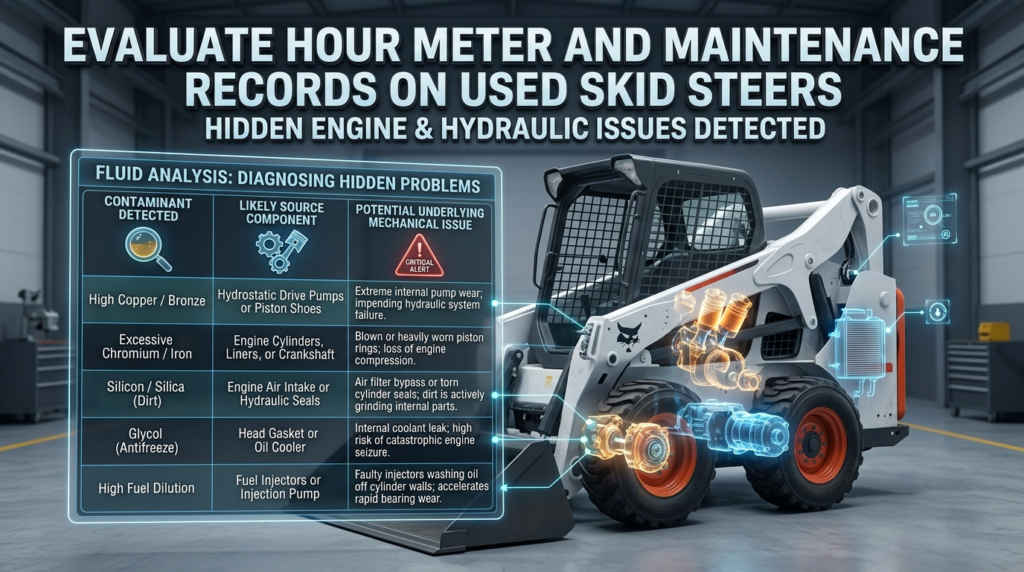
If the owner has conducted regular fluid sampling every 250 to 500 hours, it shows an elite level of preventative maintenance. The following table illustrates what the presence of specific contaminants within a fluid analysis report indicates about the machine’s true internal health:
Table: Evaluate Hour Meter and Maintenance Records on Used Skid Steers
| Contaminant Detected | Likely Source Component | Potential Underlying Mechanical Issue |
| High Copper / Bronze | Hydrostatic Drive Pumps or Piston Shoes | Extreme internal pump wear; impending hydraulic system failure. |
| Excessive Chromium / Iron | Engine Cylinders, Liners, or Crankshaft | Blown or heavily worn piston rings; loss of engine compression. |
| Silicon / Silica (Dirt) | Engine Air Intake or Hydraulic Seals | Air filter bypass or torn cylinder seals; dirt is actively grinding internal parts. |
| Glycol (Antifreeze) | Head Gasket or Oil Cooler | Internal coolant leak; high risk of catastrophic engine seizure. |
| High Fuel Dilution | Fuel Injectors or Injection Pump | Faulty injectors washing oil off cylinder walls; accelerates rapid bearing wear. |
- Reviewing Wear Patterns Over Time: Look at fluid analysis reports in sequence to determine if the amount of metal wear particles is stable or increasing, which can signal component failure.
- Hydraulic/Pump Compatibility: Make sure the hydraulic fluid report indicates zero water contamination and no particulates, because contaminated oil quickly damages expensive hydrostatic drive motors.
- Monitoring Coolant/Water System: Confirm that history shows regular coolant changes because the neglected, acidic anti-freeze will corrode aluminum parts, e.g., radiator cores and internal engine passages.
5. Matching Structural Wear to Usage History
The wear pattern of a skid steer which was used for moving loose wood mulch in a nursery will be very different from a machine which was used for hundreds of hours running a high-flow cold planer on hot asphalt or breaking concrete with a hydraulic hammer.
So, when you evaluate hour meter and maintenance records on used skid steers, one of the things you must do is to cross-check the logged hours against the kinds of applications to which the machine was exposed throughout its operating history.
High-vibration and high-load applications stress the structural frame, loader arms, and hydraulic pumps severely. If rental history or service records indicate frequent use of heavy attachments like forestrymulchers, rock saws, or asphalt cutters, then structural welds and hydraulic cooling systems should be thoroughly checked, even if the hour meter shows a relatively low number.
- Stress Crack Inspection: Check critical, frequently stressed points along the loader boom arms, quick-attach plate, and main chassis welds for hairline fractures caused by vibration-intensive demolition work.
- Pin and Bushing Slop: Measure the physical play in the main loader pivot pins; a machine used for constant heavy digging or scraping will exhibit oblong, wallowed-out pin housings that require line-boring to fix.
- Undercarriage and Track Wear: Match track replacement logs with the hour meter; for example, if a tracked machine is on its third set of rubber tracks at only 1,000 hours, it was being driven aggressively over sharp, abrasive rocks or demolition debris.
6. Comparing Rental Fleet vs. Single-Owner Maintenance Records
The location of working hours on a machine matters just as much as how many hours are recorded on the hour meter. Most used skid steers come from one of two types of environments: dedicated single-owner/operator fleets or commercial rental yards.
Each of these has distinct pluses and minuses as far as maintenance logs go, and your understanding of the operations behind the scenes through the reading of these two business models is absolutely necessary for an accurate evaluation.
Machines in rental fleets usually accrue hours rapidly and are subject to the control of inexperienced operators who may not be gentle with the controls or overload the bucket. On the plus side, national rental companies generally stick to scheduled maintenance very strictly and make use of fully automated systems to ensure that they meet these requirements for oil changes and filter replacements.
On the contrary, a single-owner machine may be well taken care of with regards to the way it was driven, but chances are that the maintenance records could be patchy, especially if that was a period where the owner had financial difficulties and decided not to invest in regular maintenance.
- Rental Fleet Pros/Cons: Usually get very well-documented and on-time service printouts for oil changes and other preventive maintenance but the machines may have seen rough treatment cosmetically, with bent panels, and aggressive driving being common issues on the lot.
- Single-Owner Pros/Cons: Typically, the machine will have fewer operator abuses and better cosmetic care, along with a history of operation that is more “regular” and “personal”. However, you will need to confirm that the owner didn’t skip any of the major and costly hydraulic services after all.
- Owner-Operator Pride: Look for evidence of an owner who genuinely cared for their equipment in the form of small clues showing up in the logbook such as notes on grease type, brand-name filter part numbers and tracking of minor adjustments.
7. Calculating the True Cost of Ownership Based on Records
Understanding how to evaluate hour meter and maintenance records on used skid steers aims to enable you to safeguard your cash flow post purchasing by calculating the true cost of ownership.
A machine priced at $15,000 with 4,000 hours and a non-existent service history might seem like a bargain compared to a $25,000 machine with 2,000 hours and flawless dealer service logs. After you have figured in all the replacement costs for key components such as drive motors, tracks, and injectors, you will realize that the seemingly cheaper machine turns out to be the more expensive one. Your evaluation results can serve as an independent negotiating tool.
- Component Lifespan Projection: By comparing the present running time with the normal OEM replacement cycles for pumps (usually 3,000 to 4,000 hours) and engines (5,000 to 7,000 hours) you can guess when major components will fail.
- Including Immediate Maintenance Catch-Up: If you see the maintenance records are indicating that the last fluid change was more than 500 hours ago, then add in the cost to flush all systems and replace all filters after you have taken delivery of the machine.
- Discounting through Omissions: Use missing parts of the service record or consulting fluid analysis reports to get the asking price lowered by the seller while ensuring that you always have funds for future repairs.
FAQs – Evaluate Hour Meter and Maintenance Records on Used Skid Steers
What is considered high hours for a used skid steer loader?
The generally accepted figure at which a skid steer loader is considered to have done “high hours” in the industry is between 3,500 and 4,000 operating hours. After this point in the life of a piece of equipment, major and costly internal components—such as engine injectors, hydrostatic drive pumps, and hydraulic wheel motors—are often close to the end of their reliable service life and may be in need of comprehensive overhauls or total replacement.
How can I tell if a skid steer hour meter has been tampered with or replaced?
You should try and look for signs of physical tampering such as a brand new dashboard cluster installed in a severely rusted and weathered cab or broken tabs around the dash assembly as well as any cut wires in the harness behind the cluster. The most trustworthy method is to have a dealer technician plug into the engine’s ECU data port so as to cross-check the internal computer runtime against the dashboard display.
What maintenance records are most important when buying a used compact loader?
The very important maintenance records to get hold of are those that document engine oil and filter changes occurring every 250 hours as well as hydraulic fluid and filter replacements being done every 500 to 1,000 hours. Furthermore, include in your search serialized invoices from commercial repair shops, certified dealership service stamps, and historical fluid analysis lab reports that track internal wear metals over time.
Is it safe to buy a used skid steer that has no service history records?
Purchasing a second-hand skid steer without any service history records is a major risk. It is something that is usually not recommended unless the price is so low as to be able to compensate for the risk. Apart from the fact that you will not know if the machine was hydraulically contaminated, chronically overheated, or simply if it had the oil not changed regularly, all of these are and can be reasons for catastrophic failure of a component not long after your purchase.
Why should I request a fluid analysis report when evaluating a used machine?
Fluid analysis reports are crucial since they reveal internal wear and tear that cannot be detected during a regular test drive. Such analysis provides detailed information on wear metals, fuel dilution, and coolant leaks, enabling one to make an informed purchase decision.
Do rental fleet skid steers make a good used equipment purchase?
Rental fleet skid steers can be a good purchase because national rental companies usually follow strict, automated computer schedules for preventative maintenance, oil changes, and regular repairs. However, the trade-off is that these machines are often operated by inexperienced users who drive them aggressively, leading to accelerated structural wear, body damage, and pin slackness despite the on-time fluid changes.
According to records, how often should a skid steer’s hydraulic fluid be changed?
Most of the standard OEM guidelines to require that the complete hydraulic fluid and filter system is replaced at intervals ranging from 500 to 1,000 working hours. However, if you happen to be reviewing the logs of the equipment and you come across fluid changes that have not been carried out in 1,500 plus hours of runtime, then you are looking at an aged system, which is at risk of suffering from abrasive or internal wear.