Best Skid Steer 2026: Top Models, Brands & Buying Guide
There’s no single best skid steer 2026 buyers should chase — there’s a best skid steer for your jobs, your attachments, and your budget. A landscaper trenching irrigation lines needs something different than a contractor loading dump trucks all day, and a farmer hauling round bales has different priorities than a rental yard stocking machines for weekend DIYers. What ties them together is a shared set of specs worth understanding before you sign anything: rated operating capacity, horsepower, hydraulic flow, lift geometry, operating weight, and total cost of ownership.
This guide walks through the models and brands worth shortlisting in 2026, breaks down what the spec sheet actually means for real jobs, and covers pricing, financing, and the mistakes that send buyers back to the dealer six months later regretting their choice.
What Is the Best Skid Steer in 2026?
The best skid steer in 2026 is the one whose rated operating capacity, hydraulic flow, and lift path match your heaviest regular task — not the one with the biggest horsepower number on the brochure. Evaluate machines on five things together: how much they can safely lift, how well their hydraulics run your attachments, how they handle in your typical workspace, what it costs to own over five years, and how fast your local dealer can get you parts when something breaks.
A 74-horsepower vertical-lift machine loading tandem-axle dump trucks all day is doing different work than a compact tracked unit squeezing between fence posts in a backyard. Reliability, dealer support, and operating costs matter just as much as the spec sheet — a machine that’s in the shop every other week isn’t the best skid steer no matter how strong its numbers look on paper.
Best Skid Steer Models for 2026
Below is a shortlist spanning entry-level to large-frame machines, verified against manufacturer and dealer specification sheets. Specifications vary by configuration — tires vs. tracks, cab vs. open station, standard vs. high-flow — so always confirm the exact build with your dealer before buying.
| Model | Horsepower | Rated Operating Capacity | Hydraulic Flow (Std/High) | Lift Type | Best For |
|---|---|---|---|---|---|
| Bobcat S76 | 74 hp | 2,900 lb | 23.3 / 30.3 gpm | Vertical | Construction, all-around use |
| Caterpillar 262D | 84 hp | 2,700 lb | 22 / 33 gpm | Vertical | Truck loading, general contracting |
| John Deere 332G | 100 hp | 3,600 lb | 25 / 41 gpm | Vertical | Heavy-duty, large-frame work |
| Kubota SSV75 | 74.3 hp | 2,690 lb | 20.9 / 30.4 gpm | Vertical | Ag, rental, construction |
| CASE SV280B | 74 hp | 2,800 lb | Std / high-flow available | Vertical | Truck loading, mid-frame contracting |
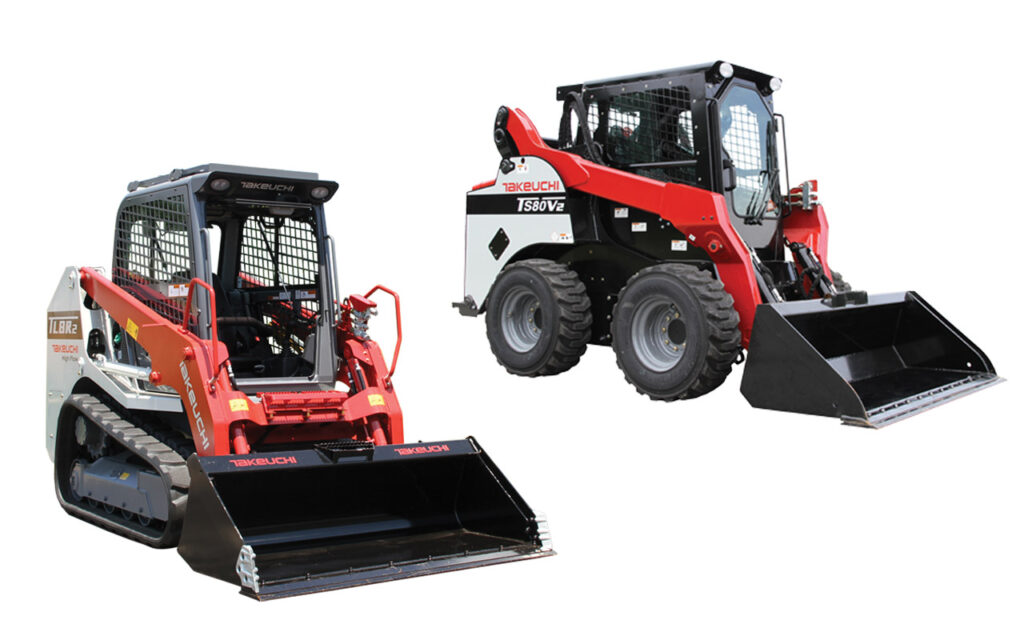
| Takeuchi TS80R2 | 74 hp | 2,825 lb | 21.5 gpm | Radial | Digging, ground-level grading |
| TYPHON STOMP X1300 | 25 hp (Kubota D1105) | Compact-class | Multi-pump piston system | Vertical | Small farms, orchards, tight-access jobs |
| TYPHON STOMP V900 | 25 hp (Kubota D1105) | 1,102 lb max load | Dual auxiliary hydraulics | — | Stand-on compact work, entry-level buyers |
Full-size machines from Bobcat, CAT, John Deere, Kubota, and CASE occupy the 60–100 hp range most contractors picture when they think “skid steer.” TYPHON Machinery’s STOMP line sits in a different, compact category — mini/stand-on skid steers built for orchards, farms, and tight residential or small-commercial jobs where a full-frame machine is overkill and a compact track loader can’t fit.
The X1300 runs a Kubota D1105 diesel with a vertical-lift boom (2,352mm pin height) and a 900mm-wide frame for narrow-row work, while the entry-level 13.5hp and 22.1hp gas-engine STOMP models give budget-conscious buyers a genuinely low-cost way into powered material handling.
Best Skid Steer Brands in 2026
Bobcat invented the category and still leads on dealer density and attachment ecosystem in the U.S. — if parts availability and resale value matter most to you, it’s hard to beat.
Caterpillar brings strong hydraulic power and a nationwide dealer network built for large fleets, with the 2-Series line covering compact to large-frame needs.
John Deere pairs deep ag/construction dealer coverage with class-leading capacity on its largest frames like the 332G — a strong pick for operators who also run Deere tractors and want parts commonality.
Kubota built its SSV line around vertical-lift reach and comfort features like the slide-up cab door, and it has a loyal following in agriculture and rental fleets.
CASE competes hard on torque, breakout force, and auxiliary flow numbers, with the SV280B aimed squarely at contractors running demanding attachments.
New Holland shares underlying engineering with CASE (both under CNH) and is a common choice where dealers overlap with existing ag equipment purchases.
Takeuchi built its reputation on radial-lift and track loader engineering, and its skid steers are popular where digging and ground-level work outweigh truck loading.
ASV specializes almost entirely in tracked machines with a reputation for flotation and undercarriage durability on soft or uneven ground.
TYPHON Machinery occupies the compact/mini and value segment — Kubota- and Honda/Briggs-powered STOMP loaders aimed at small farms, landscapers, and first-time buyers who need real hydraulic capability without a full-size machine’s price tag or footprint. TYPHON backs its skid steers with a 1-year warranty and free U.S. shipping, and its narrower frames (as little as 900mm wide) fit spaces the major full-frame brands simply can’t access.
Reliability data on brand-wide fleets varies too much by application and maintenance history to rank definitively — treat resale value and warranty terms as better predictors than anecdote.
Best Skid Steer for Different Jobs
Best Skid Steer for Construction: Prioritize rated operating capacity and hydraulic flow for breakers, augers, and grapples. Mid-to-large frame machines like the Bobcat S76, CAT 262D, or CASE SV280B handle daily truck loading and demolition debris without straining.
Best Skid Steer for Landscaping: Compact dimensions and tight turning radius matter more than raw horsepower. A narrower-frame machine — including TYPHON’s sub-1-meter-wide STOMP models — moves through gates and between beds that full-size units can’t reach.
Best Skid Steer for Farming: Versatility wins. Bale spears, manure forks, and pallet forks demand steady hydraulic flow and stable lift geometry; Kubota’s ag-focused SSV line and TYPHON’s Kubota-diesel STOMP models both target this buyer directly.
Best Skid Steer for Heavy-Duty Work: Go large-frame. The John Deere 332G’s 3,600 lb ROC and 100 hp put it at the top of this list for stacking, grading, and running high-flow attachments back to back.
Best Skid Steer for Small Contractors: Purchase price, trailer weight, and fuel burn matter as much as capability. Entry-level full-frame machines or a compact unit like the TYPHON STOMP 507 (13.5 hp) keep both purchase and operating costs down for lighter workloads.
Vertical Lift vs Radial Lift Skid Steer
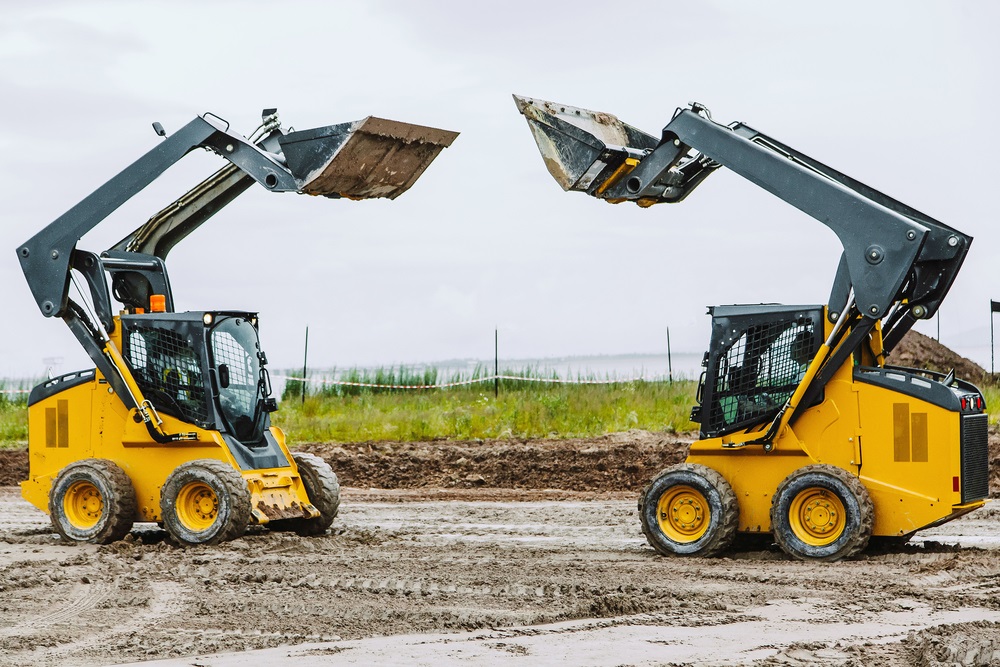
Vertical lift booms travel straight up, keeping the bucket close to the machine through the full lift path. That geometry gives more height and reach at the top of the stroke — the reason it dominates truck-loading and stacking work. Bobcat, CAT, Deere, Kubota, CASE, and TYPHON’s X1300 all use vertical-lift geometry on their featured models.
Radial lift booms move in an arc, pushing the bucket farthest forward at mid-height. That’s ideal for digging, grading, and ground-level work where reach at full height matters less than dumping angle and breakout force close to the ground. Takeuchi is a well-known radial-lift specialist.
Neither is universally better — match it to what you do most. If you load trucks and stack pallets daily, vertical lift earns its keep. If you dig, grade, and clear at ground level more than you load, radial lift often feels more natural.
What Skid Steer Specifications Matter Most?
Rated Operating Capacity (ROC): The safe working load, typically calculated at 50% of tipping load. This is the number to size against your heaviest routine lift — not the max the machine can lift once before tipping.
Tipping Load: The point at which the machine’s front wheels or tracks begin to lift off the ground under load. ROC exists specifically to keep you well clear of this limit during normal work.
Horsepower: Drives pump output and travel speed, but horsepower alone doesn’t tell you lift capacity or hydraulic power — check ROC and GPM separately.
Operating Weight: Heavier machines are more stable and put down more traction but cost more to transport and can be restricted on soft ground or narrow trailers.
Hydraulic Flow: Measured in gallons per minute (gpm), this determines which attachments the machine can run effectively — standard flow covers buckets and forks; high-flow unlocks brush cutters, mulchers, and cold planers.
Lift Height: Height to the bucket hinge pin at full lift, critical for clearing truck sides and stacking materials.
Width: Determines gate clearance, trailer fit, and job-site maneuverability — often the deciding factor for landscaping and residential work.
Standard Flow vs High-Flow Hydraulics
Standard-flow hydraulics (typically 17–25 gpm) run buckets, pallet forks, and most augers without issue. High-flow systems (often 30–40+ gpm) exist to power attachments that need serious continuous horsepower: brush cutters, mulchers, cold planers, hydraulic breakers, and snow blowers all lean on high-flow to perform at rated capacity.
Before buying a high-flow machine, check the attachment manufacturer’s required flow and pressure rating — running a high-flow attachment on a standard-flow machine (or vice versa) either starves the tool of power or risks damaging it. Not every operator needs high-flow; if your attachment list is buckets, forks, and a light auger, standard flow saves money without costing performance.
Best Skid Steer Attachments for 2026
A general-purpose bucket and pallet forks cover the majority of day-to-day tasks. Beyond that, augers handle post holes and fence work, hydraulic breakers and grapples suit demolition and debris handling, brush cutters and mulchers clear land, trenchers and landscape rakes prep ground, and snow blowers or brooms extend a machine’s usefulness into winter and site cleanup. The attachments you plan to run should shape your hydraulic flow decision more than any other single factor — decide your attachment list before you decide your machine.
How Much Does a Skid Steer Cost in 2026?
New entry-level and compact machines — including TYPHON’s smaller STOMP models — start in roughly the $5,000–$12,000 range based on current dealer listings, while full-size 60–100 hp machines from major brands commonly list from the high-teens up into the $60,000+ range for large-frame, feature-rich units. Used equipment prices vary widely by hours, condition, and region. Final pricing always depends on configuration, attachments included, dealer location, freight, taxes, and any financing or promotional terms in effect at time of purchase — confirm current numbers directly with the dealer rather than relying on published MSRPs, which change frequently.
New vs Used Skid Steer
New machines carry manufacturer warranty coverage, current emissions and technology, and predictable condition — but at a higher upfront price with immediate depreciation.
Used machines cost less upfront and avoid the steepest depreciation curve, but shift risk onto the buyer around operating hours, undercarriage wear, hydraulic condition, and unknown maintenance history.
Used skid steer inspection checklist:
- Check engine hours against visible wear and maintenance records
- Inspect tires or tracks for uneven wear and remaining tread/lug life
- Test all hydraulic functions under load, watching for slow or jerky cylinder movement
- Look for oil leaks at the boom pivots, cylinders, and hydraulic fittings
- Verify the bucket and quick-attach mechanism lock securely
- Ask for service records and confirm the seller’s return or inspection policy
How Much Does It Cost to Own a Skid Steer?
Total ownership cost stacks up well beyond the purchase price: fuel, routine maintenance, tires or tracks, hydraulic service, attachments, insurance, transportation, storage, and eventual repairs. The cheapest machine to buy isn’t always the cheapest to own — a bargain unit with poor parts availability or frequent hydraulic issues can cost more over five years than a pricier machine backed by strong dealer support and predictable service intervals.
Financing a Skid Steer in 2026
Common financing routes include manufacturer financing programs (several brands, including TYPHON, advertise dealer-arranged monthly payment options), equipment loans through banks or equipment finance companies, and leasing. Approval and terms depend on the lender, your credit and business history, the specific equipment, down payment, loan term, and whatever promotions are running at the time — financing approval is never guaranteed, and current APRs and offers should always be confirmed directly with the lender.
How to Choose the Best Skid Steer for Your Business
- Define the primary jobs the machine will handle most often.
- Determine required rated operating capacity based on your heaviest routine lift.
- Determine hydraulic requirements from your planned attachment list.
- Choose vertical or radial lift based on truck-loading vs. ground-level work.
- Check machine dimensions against gates, trailers, and job-site access.
- Select attachments before finalizing hydraulic flow.
- Check transport requirements — trailer capacity, tow vehicle rating.
- Compare dealer and parts support in your actual service area.
- Compare warranty terms across brands.
- Calculate total ownership cost, not just purchase price.
Common Skid Steer Buying Mistakes
Buyers commonly over-index on horsepower while ignoring rated operating capacity, or pick the wrong lift type for their actual daily work. Ignoring hydraulic flow requirements leaves expensive attachments underpowered. Buying too large a machine wastes money and struggles in tight spaces; buying too small forces constant overloading. Forgetting attachment compatibility, ignoring transport weight limits, comparing base sticker prices instead of full configured cost, skipping dealer-support research, and skipping a proper inspection on used equipment round out the list of costly, avoidable errors.
Best Skid Steer 2026 Comparison
| Category | Recommended Type | Why |
|---|---|---|
| Best Overall | Bobcat S76 | Balanced capacity, dealer network, resale value |
| Best for Construction | CASE SV280B | Strong torque and breakout force |
| Best for Landscaping | TYPHON STOMP X1300 | Narrow frame, tight-space access |
| Best for Farming | Kubota SSV75 | Ag-focused hydraulics and reach |
| Best for Heavy Work | John Deere 332G | Highest ROC and horsepower in this list |
| Best Compact Option | TYPHON STOMP 507 | Low cost, narrow width, entry-level power |
| Best Value | TYPHON STOMP series | Strong capability-to-price ratio for compact work |
Frequently Asked Questions
What is the best skid steer in 2026? There’s no single best skid steer 2026 buyers should default to — the right machine matches your rated operating capacity needs, hydraulic flow requirements, and typical job site. Large-frame machines like the John Deere 332G suit heavy contractors, while compact options like TYPHON’s STOMP line suit small farms and tight-access landscaping work.
What is the most reliable skid steer brand? Reliability depends heavily on maintenance history and application, not just brand. Bobcat, CAT, John Deere, Kubota, and CASE all have long U.S. track records and strong dealer networks; TYPHON backs its compact line with a 1-year warranty and lifetime tech support for buyers prioritizing value.
Which skid steer has the best lifting capacity? Among verified large-frame models, the John Deere 332G leads with a 3,600 lb rated operating capacity, making it the strongest choice reviewed here for heavy stacking and material handling.
What is the best skid steer for landscaping? Compact, narrow-frame machines suit landscaping best. TYPHON’s STOMP X1300, at 900mm wide, and similarly compact units from major brands fit through gates and between beds that full-size skid steers can’t access.
What is the best skid steer for construction? Mid-to-large frame vertical-lift machines like the Bobcat S76, CAT 262D, or CASE SV280B handle daily truck loading, material handling, and demolition debris with the capacity and hydraulic power construction sites demand.
What is the best skid steer for farming? Kubota’s SSV75 and TYPHON’s Kubota-diesel STOMP models both target agricultural buyers directly, offering steady hydraulic flow for bale handling, forks, and augers at different price points and machine sizes.
Is a vertical lift or radial lift skid steer better? Neither is universally better. Vertical lift gives more height and reach for truck loading and stacking; radial lift gives better dumping angle and breakout force for digging and ground-level grading. Match the type to your primary task.
How much does a skid steer cost in 2026? Compact and entry-level machines start roughly in the $5,000–$12,000 range, while full-size 60–100 hp machines from major brands commonly run from the high-teens into the $60,000+ range depending on configuration. Confirm current pricing directly with dealers, as it changes frequently.
Should I buy a new or used skid steer? New machines offer warranty coverage and predictable condition at a higher price; used machines cost less upfront but carry more risk around wear and maintenance history. Budget, risk tolerance, and how critical uptime is to your business should guide the decision.
Are skid steers worth buying in 2026? Yes, for operators with consistent material-handling, grading, or attachment-driven work. The upfront and ownership costs are significant, so the purchase makes the most sense when the machine will see regular, ongoing use rather than occasional projects — rental may suit occasional needs better.