Skid Steer Hydraulic Leak Troubleshooting: Step-by-Step Fixes
Nothing is more unpleasant to an equipment operator than walking up to your machine at the start of a busy shift only to find a huge puddle of fluid accumulating underneath the undercarriage. The Skid steer hydraulic leaks are more than just a mess—it brings your entire job site to a standstill, losing you precious time, labor and money.
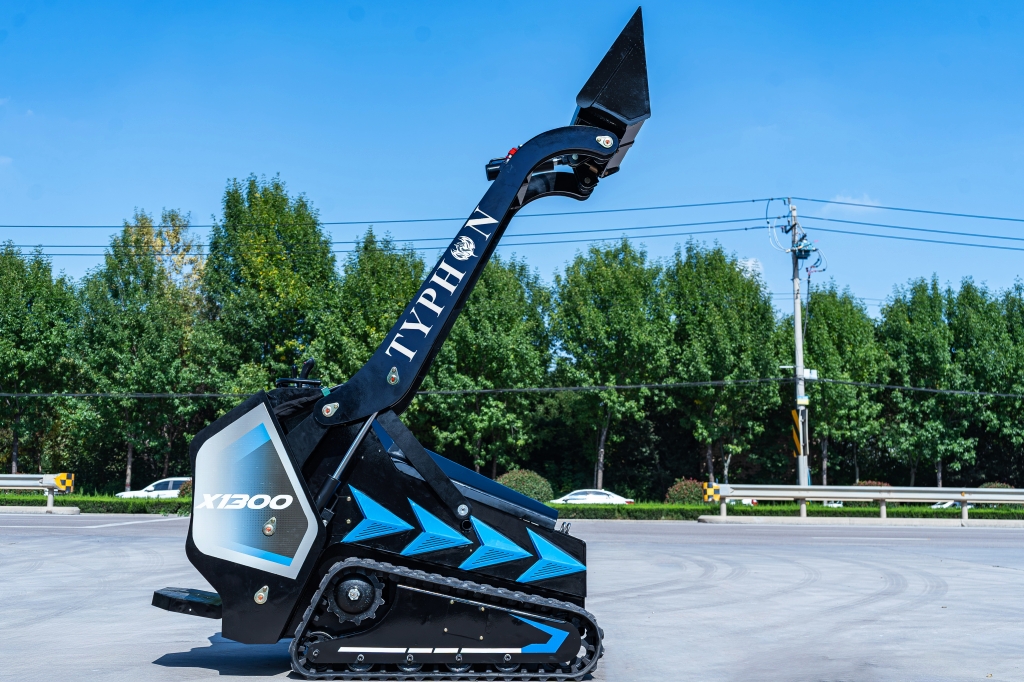
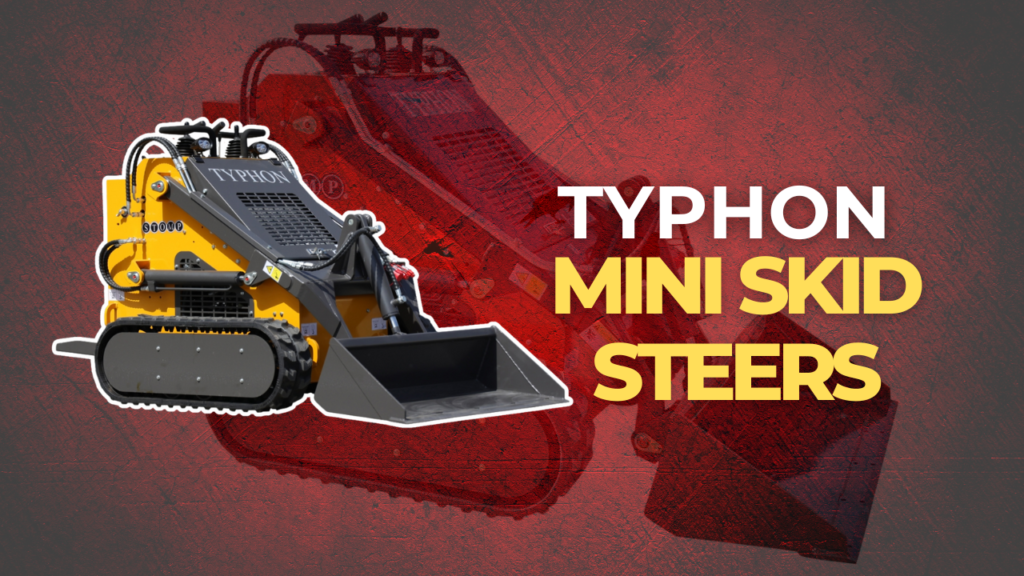
If you’re powering a heavy powerful TYPHON STOMP loader or negotiating a compact unit through tight residential gates, a completely sealed fluid system is the lifeblood of your machine’s performance. When the machine loses pressure, the lifting capacity falls off, track motors bog down, high demand attachments don’t work right.
Compact track loaders and skid steers work in some of the harshest settings you can think of – surrounded by abrasive dust, sharp debris and wide temperature variations. So it’s just a matter of time before hoses wear out and seals fail. But to save thousands of dollars in repair fees and to save your downtime, the key is to learn to accurately and safely troubleshoot skid steer hydraulic leaks the second you experience a decline in performance.
By understanding the fluid dynamics of your machine and knowing exactly where to search for stress areas, you can isolate and rectify faults before they cascade into catastrophic hydrostatic pump or drive motor failures.
- Identify early warning indications of fluid loss before it leads to catastrophic downstream component failure.
- Familiarize yourself with the basic safety measures and tools needed to troubleshoot skid steer hydraulic leaks in the field.
- Learn practical, step-by-step techniques for diagnosing and fixing common failures of O-rings, hoses and flat-face couplers.
Early warning signs of hydraulic failure
It’s a sign of a proactive and knowledgeable heavy equipment owner to catch a small leak of fluid before it becomes a high-pressure rupture. Many times, a machine will give you a host of subtle indicators that its fluid integrity has been breached long before a hose actually ruptures.
One of the most noticeable signs is when rainbow-colored oil stains or damp dirt collects directly under the engine bay, lift cylinders, or wheel hubs after the machine has been parked overnight. Beyond seeing puddles, you have to trust the sensation of the machine in operation; if your loader arms suddenly go slow, if there is no breakout force when digging, or if a drive motor wants to pull strongly to one side, you are probably suffering from an internal loss of pressure.
Also, aural signals are quite telling. If you hear a definite hissing noise – especially when the machine is put under a strong load or when an attachment is engaged – this signifies fluid or air is violently escaping through a micro-puncture or a compromised O-ring.
Your first line of defense in troubleshooting skid steer hydraulic leaks is observation, and you can notice tiny seal degradation before it starves the pump of fluid and introduces destructive aeration into the system.
- Look under the skid steer after it has been parked for new puddles, black stains, or very wet dirt.
- Watch out for a slow response of the attachment, a decrease in lifting force, or a drive motor pulling to one side.
- Listen for unusually high-pitched hissing or whining noises indicating pressured fluid exiting a damaged seal.
Typical Causes of Skid steer hydraulic leaks Fluid Systems
To permanently cure fluid loss in a machine, the mechanical reasons for these failures must be understood in the first place, rather than simply putting a temporary band-aid over a symptom.
Most exterior weeping is caused by the natural aging and degradation of O-rings and seals, which become hard, brittle and flattened after thousands of hours of intense pressure spikes and great heat.
Another major culprit is abrasive external damage to the hoses themselves. As the loader arms are repeatedly raised and lowered, the hoses if not routed properly might rub against the steel frame, gradually wearing away the protective rubber casing to expose the braided steel wire and eventually break. Additionally, high case drain pressure is one of the most destructive and generally neglected causes of drive motor seal blowouts.
When return lines become blocked, plugged or poorly routed, immense pressure builds up inside the motor housing, driving oil past the shaft seal in a matter of seconds. Knowing these main factors makes it much easier to troubleshoot skid steer hydraulic leaks and protects you from replacing an expensive engine when the underlying problem was just a collapsed return hose.
- Degradation of O-rings and rubber seals due to aging effects and continuous exposure to high temperature expansion and pressure cycling.
- Improperly routed hoses abrading aggressively on the moving steel parts of the loader causing abrasive friction damage.
- Excessive case drain pressure build-up internally due to blocked or restricted fluid return channels.
How to Fix Skid Steer Hydraulic Leaks Step-by-Step
A proper field repair is a systematic way of doing things, with safety being of the utmost importance because high pressure fluid injections are very dangerous and they can easily puncture human flesh. The first thing is to totally turn off the engine, lower the lift arms to the ground and cycle the joysticks to release any stored pressure in the lines.
When the machine is safe to work on use a high duty industrial degreaser and clean shop rags to wipe off all the grease, grime and old oil that has accumulated in the suspicious region.
You can’t successfully identify a hairline crack if the entire cylinder is caked in thick mud. Once the area is clean, temporarily turn the machine on and have an observer safely stand at a distance to locate exactly where the fresh fluid is weeping from, whether it be a loose threaded fitting, a cracked steel line, a blown cylinder seal or a weeping quick-connect coupler.
Once the point of failure has been found, shut the machine down again, release the pressure and then use the suitable sized wrenches to remove the damaged part (preferably non-adjustable wrenches since these can round off delicate hydraulic fittings).
Replace the affected component with a hose, fitting or seal kit to OEM specifications. Lubricate new O-rings with clean hydraulic fluid prior to tightening to manufacturer’s torque specification.
- Always shut off the engine and cycle the cab controls to properly depressurize the system before touching any fluid lines.
- Use a good quality degreaser and clean the suspected leak area thoroughly so you can precisely determine the exact source of the new fluid.
- Replace broken parts with genuine OEM parts and carefully lubricate new O-rings to prevent pinching during installation.
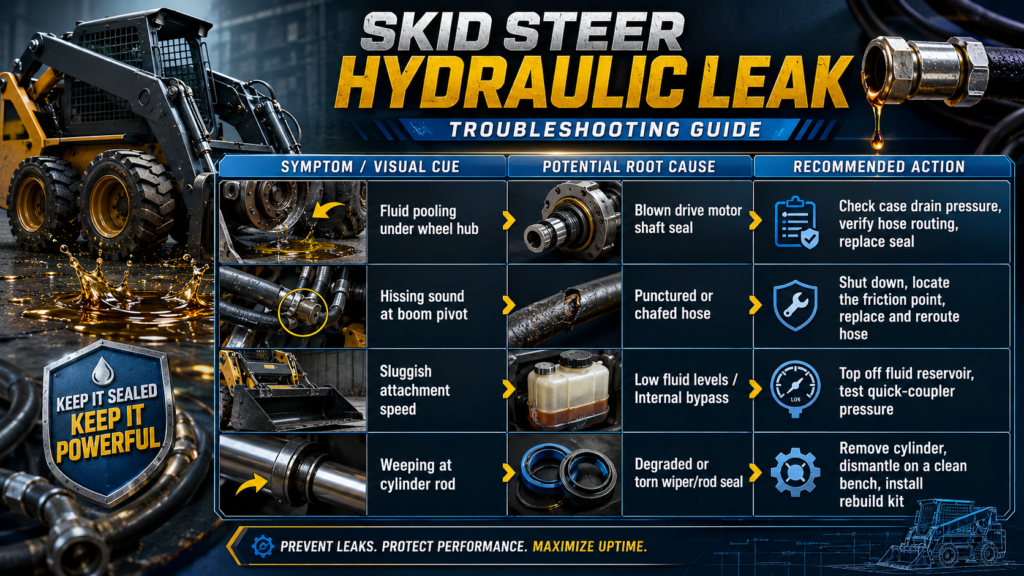
Table: Skid Steer Hydraulic Leaks Troubleshooting
| Symptom / Visual Cue | Potential Root Cause | Recommended Action |
| Fluid pooling under wheel hub | Blown drive motor shaft seal | Check case drain pressure, verify hose routing, replace seal |
| Hissing sound at boom pivot | Punctured or chafed hose | Shut down, locate the friction point, replace and reroute hose |
| Sluggish attachment speed | Low fluid levels / Internal bypass | Top off fluid reservoir, test quick-coupler pressure |
| Weeping at cylinder rod | Degraded or torn wiper/rod seal | Remove cylinder, dismantle on a clean bench, install rebuild kit |
Protecting Your SkidSteer Attachments from the Hydraulic Problems
The productivity of a skid steer is dictated by the heavy-duty attachments it operates and ensuring the fluid connection between the machine and tool is key for optimum performance. From clearing dense brush with the high-flow TYPHON Forestry Mulcher (TYPH-5126) to precise, constrained trenching with the Single-Arm Digger Attachment (TYPH-5125), the flat-faced fast couplers are the most vulnerable areas for leaks and contamination.
Each time you install or detach an attachment you run the danger of introducing microscopic dirt particles into the fluid stream that behaves like liquid sandpaper and will rapidly scrape the internal valve plates of your rotary tiller or auger motor. When troubleshooting skid steer hydraulic leaks, pay close attention to the lines feeding your attachments.
Make sure male and female couplers are spotless before mating them together. Additionally, when using extremely flexible attachments such as the 4-in-1 Bucket Combo (TYPH-5106) or the heavy-duty Hydraulic Wood Grabber, careful hose routing is needed to ensure the lines aren’t pinched in the clam-shell mechanism or dragged through abrasive gravel while in use.
- Always check the male and female flat-faced couplers and wipe them with a clean rag before to connecting any implement.
- When working with tools such as the 4-in-1 Bucket, arrange auxiliary hoses to avoid crushing or dragging of hoses during heavy operation.
- Inspect the hydraulic drive motors on high demand tools such as the Rotary Tiller and Auger regularly for any early signs of seal wear.
Table: Skid Steer Attachments
| Attachment Name | SKU Number | Primary Jobsite Function | Crucial Hydraulic Maintenance Tip |
| Forestry Mulcher | TYPH-5126 | Aggressive vegetation control | Monitor return line flow to prevent heat buildup and motor seal blowout |
| Single-Arm Digger | TYPH-5125 | Precision confined excavation | Check pivot point hoses for abrasive wear during full-swing digging |
| Rotary Tiller | TYPH-5115 | Heavy-duty soil preparation | Ensure flat-face couplers are totally free of dirt before connecting |
| 4-in-1 Bucket Combo | TYPH-5106 | Dozing, grappling, and scooping | Inspect internal cylinder rod seals daily for weeping |
Preventative Maintenance to Prevent Future Downtime
The cheapest leak is the one that never happens, and a tight, disciplined preventative maintenance routine is the best investment an equipment owner can make. This goes back to the idea of prevention, and it starts with a daily walkaround; five minutes before turning on the engine to visually check the loader arms, underbelly and attachment connection points can save you from a major blowout later in the day.
It is vitally critical to check your hydraulic fluid reservoir levels every single day since running a machine low on oil introduces air into the system (aeration) and causes the pumps to cavitate, which quickly destroys internal metal components.
Also, by sticking to the manufacturer’s suggested intervals for changing hydraulic filters and doing thorough fluid flushes you will dramatically increase the life of your O-rings, valves and drive motors by removing microscopic metallic shavings and deteriorated oil from the circuit. Consistently troubleshooting skid steer hydraulic leaks through daily observation turns your business from a reactive, crisis management strategy into a highly effective, preventive workflow that keeps your STOMP loaders working smoothly.
- Be committed to doing a five-minute visual inspection of all visible hoses, cylinders and undercarriage components before each day’s operation.
- Correct fluid levels are important to prevent serious pump cavitation and harmful heat build-up in the hydraulic system.
- Change fluid filters accurately according to the manufacturer’s timetable to remove abrasive impurities from the fluid circuit.
When to Contact a Hydraulic Repair Expert
While a skilled owner-operator can replace an exterior hose or change out a broken quick-connect coupling, some complicated fluid system failures require the specialized skills of a licensed heavy machinery mechanic.
In the case of a total hydrostatic drive failure, extreme unresponsiveness in the steering controls or loud grinding noises originating from the pump room, DIY fixes can often lead to more catastrophic damage.
Sophisticated diagnostics use highly specialized equipment such as inline flow meters and digital pressure gauges to assess pump output, determine internal bypass rates and calibrate delicate relief valves.
And if you keep replacing the same drive motor shaft seal over and over again, chances are you have a hidden internal restriction or a complicated case drain pressure problem that demands the diagnostic eye of an expert. It’s great to know how to fix a skid steer hydraulic leak on a surface level, but it’s much better to know when you’re out of your tooling and knowledge base and to be able to safeguard your heavy machinery investment.
- If your skid steer completely loses drive power or has major steering issues, call a skilled specialist to fix it.
- For repairs requiring specialist flow meters, digital pressure testing or relief valve calibration, call in skilled mechanics.
- Seek professional assistance if you encounter recurring seal blowouts on the same component after a repair.
FAQs – Skid Steer Hydraulic Leaks
How frequently should I check my skid steer’s hydraulic system?
Before you start the engine, you should do a simple visual inspection of all hoses, cylinders and fluid levels every single day. Every 100 hours of operation a more thorough in-depth inspection should be made for swelling hoses, chafing and weeping fittings.
Can incorrect hydraulic fluid cause leaks?
Sure. Incorrect viscosity of the fluid or lack of required anti-wear additives can swiftly destroy rubber seals and O-rings. Use the exact fluid type advised by the manufacturer of your machine.
How can I detect if my skid steer hydraulic system is over pressurized?
Signs of over-pressurization are sluggish vehicle performance, loud hissing sounds, bulging/swollen rubber hoses and repeated blown seals. A mechanic will have to put a pressure gauge inline to test the PSI of the system against manufacturer specs to confirm this.
What makes a hydraulic drive motor shaft seal blow out over and over again?
The most prevalent cause of recurring shaft seal failure is too much case drain pressure. If return lines are constricted, kinked or improperly routed, tremendous pressure builds up inside the motor housing and the fluid forcefully pushes past the weakest point, the shaft seal.
What can I do if my flat-face quick coupler is leaking?
If a coupler leaks when disconnected, the cartridge seal within is probably damaged. First try cleaning the faces well to make sure dirt is not holding the valve open. If the leak continues, the whole coupler or the inner O-ring seal kit must be replaced.
Is it safe to touch a leaking hydraulic hose when the machine is running?
No, it’s quite risky. Hydraulic fluid is under great pressure and can easily pierce a glove and shoot directly into your skin, creating serious medical emergencies. Always turn off the machine and depressurize before running your hands around lines.
How can I know if my skid steer hydraulic fluid is contaminated?
Signs of contamination include: deeply cut metal on cylinder rods that quickly damages seals, cloudy or milky looking fluid (from water infiltration) and a fast increase in system operating temperatures from increased internal friction.
Conclusion – Skid steer Hydraulic Leaks
But learning the fluid dynamics of your heavy equipment isn’t only about keeping the undercarriage clean. It’s about zealously defending your business’ bottom line and optimizing your operating efficiency.
A skid steer is a big investment, therefore fixing every little fluid leak with the utmost seriousness will ensure your TYPHON STOMP loaders and specialty attachments provide maximum power when you need it most. By committing to frequent visual inspections, maintaining your flat-face couplers and swapping out degraded hoses before they fail, you can almost completely eliminate surprise job site malfunctions.
So, if you see that strange oil stain under your machine, don’t just ignore it. Use the actionable steps in this tutorial to confidently fix skid steer hydraulic leaks and keep your machinery running at its very best.
- Any small fluid leak should be considered to be a significant signal of a possible catastrophic and very expensive pump or motor blowout.
- Proactive maintenance schedule with rigorous adherence, including daily visual checks and periodic fluid filter replacements.
- Bookmark this whole guide and always have step-by-step diagnostic strategies at your fingertips when working out in the field.